

Most people have moments when they lose their temper.
A stressful day, an argument with a loved one, or an unexpected frustration can lead to saying something they regret or raising their voice.
For most people, those reactions are occasional and generally proportionate to the situation.
But for others, anger feels different.
A relatively minor event can trigger an intense emotional explosion that seems impossible to control. The reaction may last only minutes, but the consequences can affect relationships, work, finances, and emotional well-being for years.
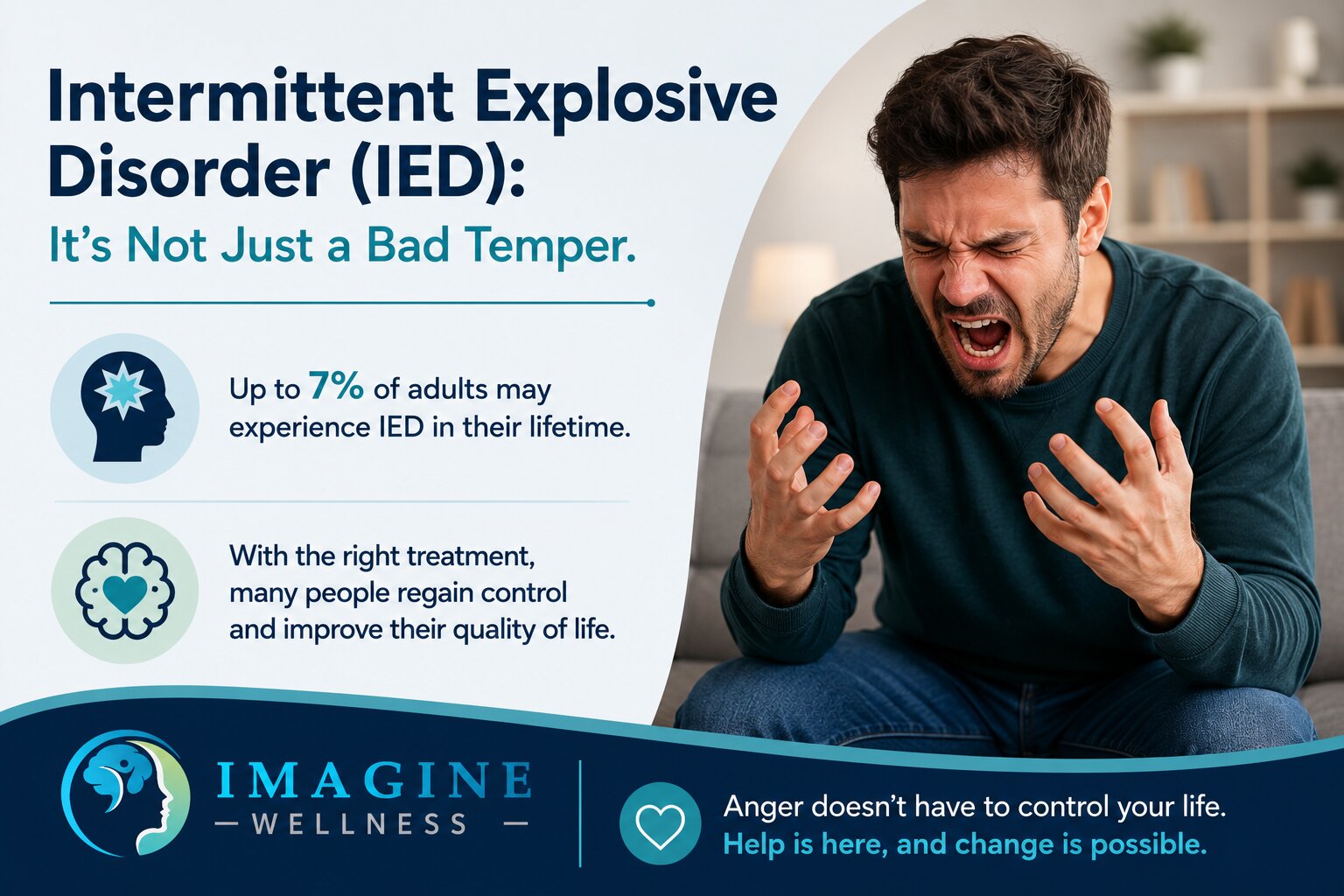
This pattern may be associated with intermittent explosive disorder, a recognized mental health condition characterized by repeated episodes of impulsive, disproportionate aggression.
The important thing to understand is that this is not simply a personality flaw or a lack of willpower. It is a treatable condition, and many people experience significant improvement with evidence-based care. At Imagine Wellness Center, our anger management treatment programs help individuals throughout Fayetteville and the south Atlanta metro understand the causes of intense anger, develop healthier coping skills, and regain control over their emotional responses.
What Is Intermittent Explosive Disorder?
Intermittent explosive disorder (IED) is a mental health condition recognized in the Diagnostic and Statistical Manual of Mental Disorders (DSM-5).
It involves repeated episodes of impulsive anger or aggressive behavior that are far more intense than the situation would reasonably warrant.
These episodes are typically:
- Sudden
- Difficult to control
- Out of proportion to the trigger
- Not planned or premeditated
- Followed by regret, embarrassment, or guilt
Unlike calculated aggression, the outbursts seen in IED are impulsive. The individual often describes feeling overwhelmed by emotion in the moment and may later wonder why they reacted so strongly.
Although anger is the most visible symptom, the condition involves much more than simply “having a bad temper.”
How IED Differs From Ordinary Anger
Everyone experiences anger.
Anger itself is a normal human emotion that can motivate healthy problem-solving or signal when boundaries have been crossed.
The difference lies in intensity, frequency, and control.
Someone without IED might:
- Become frustrated during an argument
- Raise their voice briefly
- Calm down after discussing the issue
Someone experiencing IED may instead:
- Explode over relatively minor frustrations
- Throw or break objects
- Shout intensely
- Engage in verbal aggression
- Act impulsively before thinking
- Feel unable to stop the outburst once it begins
The emotional reaction is significantly larger than the triggering event.
For example:
A delayed text message.
Someone cutting in line.
Traffic.
A misplaced household item.
A disagreement over chores.
Situations that might irritate most people can trigger overwhelming emotional responses in someone living with IED.
Common Symptoms
Symptoms vary between individuals, but many people experience:
Emotional Symptoms
- Sudden intense anger
- Irritability
- Feeling overwhelmed by emotion
- Rage that escalates rapidly
- Difficulty calming down
Behavioral Symptoms
- Shouting
- Verbal arguments
- Threatening language
- Slamming doors
- Throwing objects
- Damaging property
- Physical aggression in some cases
Not everyone with IED becomes physically aggressive. Some individuals primarily experience verbal outbursts or destructive behaviors directed toward objects rather than people.
Physical Symptoms Before an Outburst
Many people notice warning signs, including:
- Racing heart
- Muscle tension
- Trembling
- Pressure in the chest
- Tingling sensations
- Increased energy
- Feeling “ready to explode”
These physical sensations may build quickly before the emotional outburst occurs.
Feelings Afterward
Once the episode passes, many individuals report:
- Guilt
- Shame
- Embarrassment
- Regret
- Emotional exhaustion
This cycle can be emotionally painful and contribute to depression, anxiety, and relationship difficulties.
The Impact on Daily Life
Without treatment, IED can affect many areas of life.
Relationships
Repeated anger outbursts may create fear, mistrust, and conflict with:
- Partners
- Children
- Parents
- Friends
- Coworkers
Loved ones often begin “walking on eggshells,” unsure what might trigger the next episode.
Employment
Frequent emotional outbursts can lead to:
- Workplace conflicts
- Disciplinary action
- Difficulty working in teams
- Job loss
Financial Consequences
Impulsive reactions sometimes result in:
- Damaged property
- Legal expenses
- Lost employment opportunities
- Medical costs
Emotional Well-Being
Many individuals living with IED genuinely want to change.
The repeated cycle of exploding, apologizing, and promising it won’t happen again can become emotionally exhausting.
What Causes Intermittent Explosive Disorder?
Researchers believe IED develops through a combination of biological, psychological, and environmental factors.
No single cause explains every case.
Brain Function
Research suggests differences in the brain systems involved in emotional regulation, impulse control, and threat processing may contribute to the condition.
Genetics
Some evidence indicates that IED may run in families, although genetics alone do not determine whether someone develops the disorder.
Childhood Experiences
Risk factors may include:
- Exposure to violence
- Childhood trauma
- Abuse
- Neglect
- Growing up in environments where aggressive behavior was common
These experiences do not automatically cause IED, but they may increase vulnerability.
Mental Health Conditions
IED may occur alongside:
- Anxiety disorders
- Depression
- ADHD
- Substance use disorders
- Certain personality disorders
A thorough evaluation helps determine whether another condition is contributing to anger symptoms.
Common Triggers
While triggers differ from person to person, common examples include:
- Feeling criticized
- Being interrupted
- Traffic congestion
- Financial stress
- Family disagreements
- Feeling disrespected
- Unexpected changes
- Workplace conflict
- Fatigue
- Chronic stress
Importantly, the trigger itself is usually not the true cause.
Instead, it activates underlying emotional and neurological patterns that have become difficult to regulate.
How Is IED Diagnosed?
Diagnosis should always be made by a qualified mental health professional.
There is no blood test or brain scan that confirms IED.
Instead, clinicians perform a comprehensive evaluation that may include:
- Mental health history
- Medical history
- Description of anger episodes
- Frequency and severity of outbursts
- Impact on work and relationships
- Family history
- Screening for other mental health conditions
To diagnose IED, clinicians also consider whether the aggressive episodes are better explained by another medical, neurological, or psychiatric condition, substance use, or medication effects.
Because anger can occur in many different disorders, careful assessment is essential.
Why Self-Diagnosis Can Be Misleading
Many people assume they simply have an “anger problem.”
Others believe they are just naturally hot-tempered.
In reality, repeated explosive anger may have several possible explanations, including:
- Trauma-related conditions
- Mood disorders
- Anxiety disorders
- ADHD
- Substance use
- Medical conditions
- IED
Receiving an accurate diagnosis allows treatment to address the underlying cause rather than only the visible behavior.
How Therapy Helps People Manage IED
The encouraging news is that IED is treatable.
Treatment focuses on helping individuals recognize emotional patterns earlier, improve impulse control, and develop healthier responses to frustration.
Cognitive Behavioral Therapy (CBT)
CBT is one of the most well-supported treatments for IED.
Therapy often helps individuals:
- Identify anger triggers
- Recognize distorted thinking
- Challenge automatic thoughts
- Slow impulsive reactions
- Build healthier coping strategies
Over time, many people become better able to respond thoughtfully instead of reacting automatically.
Emotional Regulation Skills
Therapy teaches practical techniques such as:
- Recognizing early warning signs
- Controlled breathing
- Relaxation exercises
- Grounding strategies
- Problem-solving skills
- Emotional awareness
Learning these skills before anger reaches its peak can significantly reduce the intensity of future episodes.
Stress Management
Chronic stress lowers emotional resilience.
Treatment often includes improving:
- Sleep habits
- Exercise routines
- Time management
- Communication skills
- Healthy coping methods
Reducing overall stress makes emotional regulation easier.
Addressing Co-Occurring Conditions
If anxiety, depression, trauma, ADHD, or substance use is contributing to emotional dysregulation, treatment typically addresses those concerns as well.
Treating the whole person often produces better long-term outcomes than focusing on anger alone.
When Professional Support May Be Helpful
It may be time to seek help if anger:
- Feels impossible to control
- Damages relationships
- Causes problems at work
- Leads to verbal or physical aggression
- Results in guilt after episodes
- Causes property damage
- Creates fear in loved ones
- Happens repeatedly despite efforts to change
Seeking treatment is not a sign of weakness.
It is often the first step toward rebuilding healthier relationships and improving overall quality of life.
Finding Support in Fayetteville, GA
Living with explosive anger can leave people feeling misunderstood, ashamed, or convinced that change is impossible. Many individuals blame themselves without realizing that repeated, disproportionate anger outbursts may reflect an underlying mental health condition rather than a personal failing.
At Imagine Wellness Center, we provide outpatient mental health services for adults throughout Fayetteville and the south Atlanta metro. Through individualized therapy, cognitive behavioral strategies, emotional regulation training, and comprehensive assessments, we help people understand the factors contributing to intense anger and develop healthier, more effective ways of responding to life’s challenges.
Call Imagine Wellness Center today at (770) 270-3681 to schedule a confidential assessment and take the first step toward healing. Recovery is not about eliminating anger altogether—it’s about learning how to respond to difficult emotions without allowing them to take control.
Frequently Asked Questions
Is intermittent explosive disorder a real condition?
Yes. Intermittent explosive disorder is a recognized mental health diagnosis included in the Diagnostic and Statistical Manual of Mental Disorders (DSM-5). It involves repeated impulsive anger outbursts that are significantly out of proportion to the situation.
What triggers intermittent explosive disorder?
Triggers vary from person to person and may include criticism, stress, frustration, feeling disrespected, family conflict, financial concerns, traffic, or unexpected changes. While these situations can trigger an episode, they are not considered the underlying cause of the condition.
Can anger management therapy treat IED?
Yes. Evidence-based therapies—particularly cognitive behavioral therapy (CBT)—can help individuals recognize triggers, improve emotional regulation, reduce impulsive reactions, and develop healthier coping strategies. Treatment may also address any co-occurring mental health conditions that contribute to emotional dysregulation.
Is IED the same as having a bad temper?
No. While everyone experiences anger occasionally, IED involves recurrent, impulsive outbursts that are significantly more intense than the situation warrants and often lead to distress or impairment in relationships, work, or daily functioning.
Can medication help with IED?
There is no medication specifically approved for intermittent explosive disorder. However, in some cases, a healthcare provider may recommend medication to help manage symptoms or treat co-occurring conditions such as anxiety or depression. Medication decisions should always be made in consultation with a qualified medical professional.