

The first panic attack changes something.
Not just emotionally. Physically.
One minute you’re standing in a grocery store, driving home, sitting in traffic, or trying to fall asleep. The next, your heart starts pounding so hard you’re convinced something is terribly wrong. Your chest tightens. Your vision shifts. Your hands shake. You feel trapped inside your own body.
A lot of people genuinely believe they’re dying during their first panic attack.
And honestly? It makes sense.
Panic attacks don’t feel like “stress.” They feel like danger.
Then comes the second layer nobody talks about enough:
The fear of it happening again.
That fear can quietly take over your life.
At Imagine Wellness Centers’ support for anxiety-related struggles, we work with people across Atlanta who are trying to answer a question that feels deeply personal:
“Do I need counseling, medication, or both?”
Especially people who are sober curious or already questioning whether they’ve been relying on alcohol, weed, nicotine, stimulants, or other coping habits just to get through the day.
If that’s you, take a breath.
You do not have to figure this out perfectly overnight.
Panic Attacks Can Make You Stop Trusting Yourself
One of the hardest parts about panic attacks is how quickly they make your own body feel unsafe.
Before panic entered the picture, your heartbeat was just background noise. Breathing was automatic. Leaving the house didn’t require mental preparation.
Now every physical sensation feels loaded.
A skipped heartbeat becomes terrifying.
Dizziness feels dangerous.
Stress feels catastrophic.
You start monitoring yourself constantly.
Many people become trapped in a cycle of:
- Overanalyzing bodily sensations
- Searching symptoms online
- Avoiding situations that trigger panic
- Reassuring themselves repeatedly
- Feeling embarrassed by how afraid they’ve become
And the more panic interrupts daily life, the smaller life starts to feel.
You may avoid:
- Highways
- Restaurants
- Gyms
- Airplanes
- Crowded stores
- Social situations
- Long meetings
- Being alone
The difficult part is that avoidance often feels helpful at first.
But over time, it teaches the nervous system something dangerous:
“This situation really was unsafe.”
That’s how panic slowly grows roots.
Counseling Helps You Understand What Your Nervous System Is Trying to Say
A lot of people assume therapy is just sitting in a room talking about childhood memories forever.
Good counseling for panic attacks is usually much more practical and emotionally grounding than people expect.
It helps you understand:
- Why panic attacks happen
- How fear cycles build
- What triggers your nervous system
- Why avoidance reinforces anxiety
- How stress gets trapped in the body
- What emotional patterns may be intensifying symptoms
For some people, panic attacks arrive after years of silent stress.
Others notice them after burnout, grief, trauma, relationship instability, health scares, or major life changes.
And sometimes panic shows up after long periods of pretending everything is fine.
That’s part of what makes panic attacks so emotionally confusing. They often force people to confront things they’ve been outrunning for a long time.
Counseling creates space to stop fighting yourself every minute of the day.
Not through shame.
Not through “positive thinking.”
But through learning how your nervous system actually works.
Medication Is Not a Moral Failure
This conversation matters because so many people feel ashamed even considering medication.
Especially sober curious individuals.
A lot of people worry:
- “Will medication change who I am?”
- “What if I become dependent?”
- “Does needing medication mean I failed?”
- “Shouldn’t I be able to handle this naturally?”
Those fears are incredibly common.
And honestly, there’s no single right answer for everyone.
Some people improve significantly through therapy, lifestyle changes, nervous system work, and emotional support alone.
Others feel so overwhelmed physically that medication helps create enough stability to function again.
For many people, medication doesn’t erase emotions. It simply lowers the volume of constant alarm.
Like finally being able to hear yourself think after a fire alarm has been blaring for months.
Medication isn’t about weakness.
It’s about reducing suffering enough for healing to become possible.
And a good provider should never pressure you. They should help you make informed decisions that align with your comfort level, goals, and experiences.
Sober Curious People Often Notice Panic Hits Harder Than Expected
This part deserves honesty.
A lot of people exploring sobriety first realize something deeper is wrong because panic attacks stop responding to their usual coping methods.
Maybe alcohol used to calm social anxiety — until it started causing rebound panic the next day.
Maybe weed once helped you relax — until certain strains suddenly intensified fear or dissociation.
Maybe caffeine became the thing keeping your exhausted body functioning while quietly worsening anxiety underneath.
Many sober curious people live in a confusing middle space:
Not necessarily identifying as addicted.
But also realizing their nervous system feels completely overloaded.
That realization can feel scary.
Because once you notice it, it’s hard to unsee.
Sometimes panic attacks are the body’s way of saying:
“We cannot keep running on stress and survival mode forever.”
Not as punishment.
As information.
You Don’t Need to Wait Until You Completely Break Down
This is one of the biggest myths surrounding mental health support.
People often think treatment is only for people in visible crisis.
So they keep pushing through.
Even while:
- Barely sleeping
- Constantly scanning for danger
- Avoiding places they once enjoyed
- Feeling detached from themselves
- Living with quiet dread every day
High-functioning anxiety can hide enormous suffering.
Especially in people who are good at appearing calm externally.
Many panic sufferers become masters of performance.
They smile while their chest tightens.
Work while dissociating.
Socialize while mentally planning escape routes.
Eventually that constant self-monitoring becomes exhausting.
You do not have to earn support by collapsing first.
You are allowed to seek help because your life feels harder than it should right now.
Treatment Works Best When It Feels Collaborative
One reason people avoid care is because they fear losing control.
They worry someone will immediately push medication.
Or dismiss their fears.
Or label them.
Good treatment should feel collaborative instead of controlling.
You deserve providers who:
- Listen without rushing
- Explain options clearly
- Respect your concerns
- Help you move at a reasonable pace
- Treat you like a person, not a diagnosis
For some people, treatment may involve:
- Weekly counseling
- Trauma-informed therapy
- Medication support
- Nervous system regulation strategies
- Group support
- Structured daytime care during severe periods
There is no gold medal for suffering alone.
And healing rarely happens through isolation.
Recovery Usually Happens Quietly Before It Happens Loudly
One frustrating truth about panic recovery is that progress often feels invisible at first.
People expect dramatic breakthroughs.
But healing usually begins in quieter moments.
Like:
- Driving somewhere without rehearsing escape plans
- Going through a checkout line without panic
- Sleeping through the night
- Feeling present during dinner with friends
- Drinking coffee without immediately spiraling
- Sitting with discomfort without feeling consumed by it
Those moments matter deeply.
Because panic recovery is not about becoming fearless.
It’s about teaching your body that discomfort is survivable and safety is still possible.
That takes repetition.
Support.
Patience.
And sometimes more help than you originally expected to need.
The Goal Isn’t to Become a Different Person
This is especially important for sober curious people afraid of losing themselves.
Many people fear treatment will flatten them emotionally or erase their personality.
But the goal of support is not to make you robotic.
It’s to help you stop living in constant survival mode.
There’s a difference between feeling emotions and being trapped by them.
Right now, your nervous system may be reacting like every stressful moment is an emergency.
Healing helps create space between the trigger and the fear.
Space to breathe.
Space to think.
Space to live again.
And honestly? Many people discover they become more themselves after getting support — not less.
Because panic had been shrinking their world for so long.
FAQ
How do I know if I need counseling for panic attacks?
If panic attacks are affecting your daily life, sleep, relationships, work, or sense of safety, counseling may help you understand and manage the patterns fueling anxiety.
Can therapy stop panic attacks completely?
For many people, therapy significantly reduces the frequency and intensity of panic attacks. Some people stop having them entirely, while others learn how to move through them without fear controlling their lives.
Should I try therapy before medication?
There’s no universal rule. Some people prefer starting with counseling, while others benefit from combining therapy and medication early on. The right approach depends on symptom severity, personal comfort, and overall mental health needs.
Is it bad to take medication for panic attacks?
No. Medication can be an effective tool for managing overwhelming symptoms. Taking medication does not mean you’re weak or failing.
Can alcohol or weed make panic attacks worse?
Yes. While some substances may temporarily numb anxiety, they can also increase panic symptoms, especially over time or during withdrawal periods.
What if I’m sober curious but not fully sober?
You can still seek support. Many people explore treatment while questioning their relationship with substances rather than identifying as fully sober.
Why do panic attacks feel physical?
Panic attacks activate the body’s fight-or-flight system, which creates real physical symptoms like chest tightness, dizziness, sweating, numbness, and rapid heartbeat.
What happens if panic attacks go untreated?
Untreated panic attacks can sometimes lead to worsening anxiety, avoidance behaviors, isolation, depression, or difficulty functioning in everyday situations.
How long does treatment for panic attacks usually take?
Everyone’s timeline is different. Some people improve within months, while others benefit from longer-term support. Healing is rarely linear.
Can panic attacks happen even if I look “fine” to everyone else?
Absolutely. Many people experiencing severe anxiety appear highly functional externally while struggling intensely internally.
You are not dramatic for wanting relief.
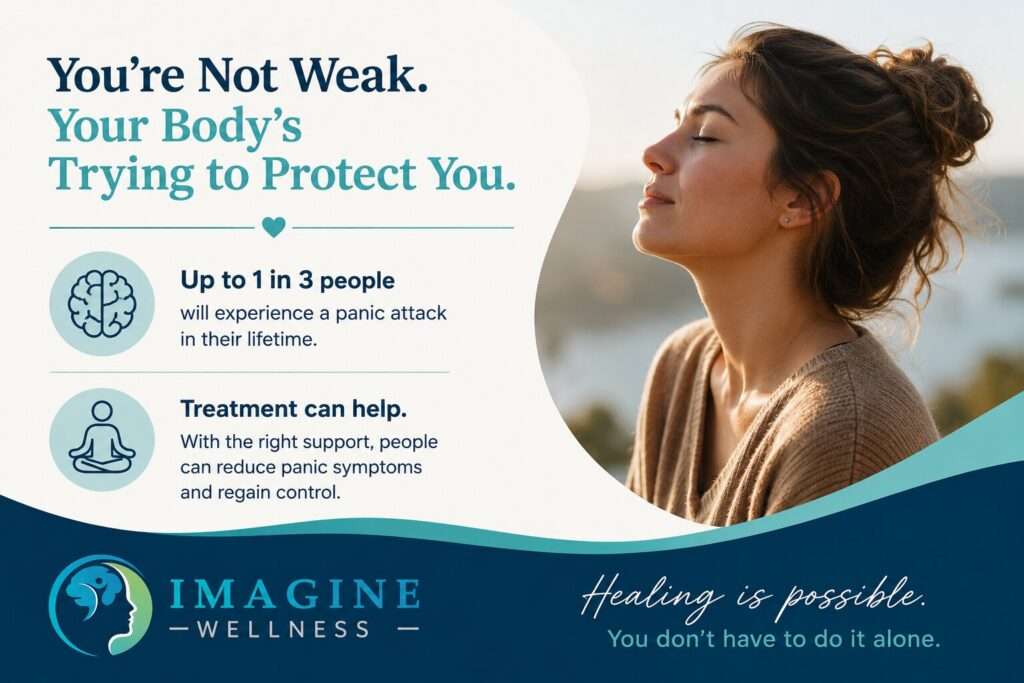
You are not weak for needing support.
And you are not failing because your nervous system feels overwhelmed right now.
If you’d like help exploring counseling, medication support, or care connected to conditions and anxiety support, Imagine Wellness Centers is here to help you understand your options without judgment or pressure.
Call 678-736-8983 or visit our conditions, anxiety services to learn more about our conditions, anxiety services in Atlanta, GA.