

There’s a quiet moment a lot of people don’t talk about—the one where weekly therapy stops being enough, and things start slipping again. Not dramatically. Just enough to feel it in your chest. The anxiety creeps back in. The depression feels heavier. The coping tools you know start to feel… out of reach.
If you’ve been here before—maybe even started a program and then stopped going—you’re not alone. And more importantly, you didn’t ruin your chance.
You just didn’t have the right way to use it yet.
Early on, you can explore options like structured outpatient care without committing to something overwhelming. But how you use that time matters more than just being there.
Stop Treating It Like Attendance—Start Treating It Like Practice
A lot of people approach multi-day weekly treatment like a class. Show up, listen, maybe talk a little, then go home and try to “be better.”
That approach quietly fails.
Because this isn’t school. It’s not about understanding concepts. It’s about rewiring patterns.
Think of it like learning how to swim. You can sit by the pool and study technique all day—but until you actually get in the water and feel uncomfortable, nothing changes.
This time, treat every session like practice:
- If a coping skill is introduced, try it that same day
- If something feels awkward, that’s probably where the growth is
- If you catch yourself zoning out, gently pull yourself back in
You’re not there to observe recovery. You’re there to participate in it.
Tell the Truth Faster Than You Want To
Most people don’t leave early because they don’t care. They leave because they’re still protecting something.
Maybe it’s:
- The fear of being judged
- The habit of minimizing your pain
- The belief that you shouldn’t “burden” anyone
So you hold back.
You share the safer version of your story. You wait until you feel more comfortable. You try to figure things out on your own first.
But here’s the truth: the longer you filter yourself, the longer it takes for anything to actually shift.
If you go back, try this one small but powerful change:
Say the thing you were planning to wait weeks to say… sooner.
Not perfectly. Not eloquently. Just honestly.
That’s where things start to open up.
Use the Hours Between Sessions (This Is Where It Actually Works)
Here’s something most people don’t realize:
The real impact of an Intensive Outpatient Program IOP doesn’t happen in the room.
It happens in the spaces between.
It shows up:
- On a random Tuesday afternoon when your anxiety spikes out of nowhere
- Late at night when your thoughts start looping
- In a conversation where you’d normally shut down or avoid
That’s your real work.
The sessions give you tools—but your life gives you the practice field.
Try this approach:
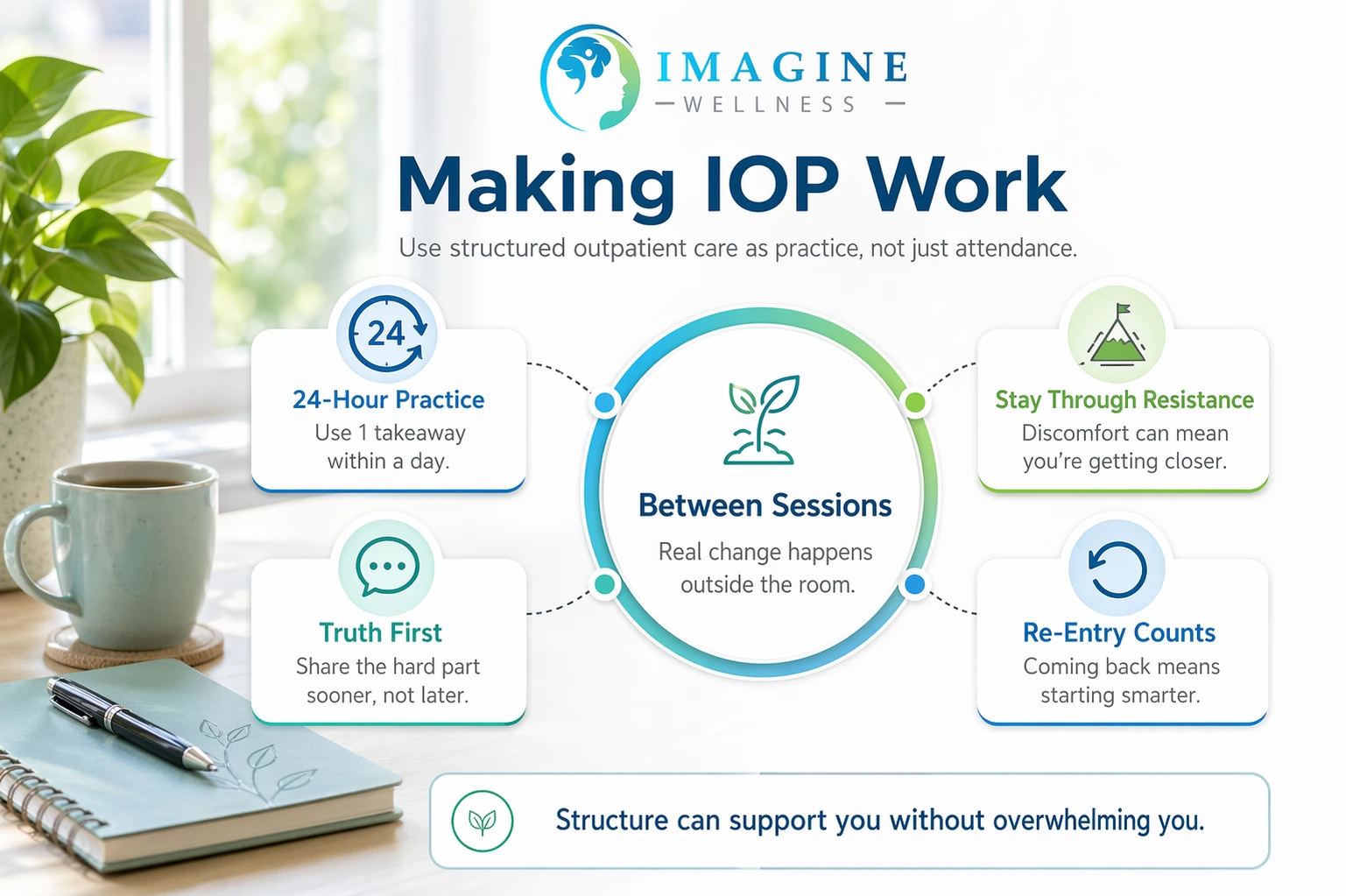
- After each session, pick one takeaway
- Use it within 24 hours, even if it feels clumsy
- Notice what works, what doesn’t, and bring that back
You’re not expected to get it right. You’re expected to stay engaged.
Expect Resistance—It Doesn’t Mean It’s Not Working
There’s a phase that almost everyone hits—but few people talk about.
It’s the part where this kind of care starts to feel… frustrating.
You might think:
- “This isn’t helping.”
- “I’ve already heard all this before.”
- “I don’t feel like talking today.”
You might feel irritated, closed off, or even tempted to stop showing up.
That moment matters more than it seems.
Because often, that resistance isn’t failure—it’s friction. And friction usually means you’re getting close to something real.
Many people who ghosted programs before? They left right here.
If that feeling shows up again, try staying just a little longer than your instinct says to.
Sometimes the breakthrough is one uncomfortable week away.
Let It Be Messy (You Don’t Have to “Do It Right”)
There’s often this quiet pressure to be the “good client.”
To say the right things.
To make progress quickly.
To look like you’re improving.
But healing doesn’t work like that.
It’s inconsistent. It’s awkward. It’s full of starts and stops.
You might:
- Have a great week, then crash the next
- Open up one day and shut down the next
- Understand something deeply but still struggle to apply it
That doesn’t mean you’re doing it wrong.
It means you’re actually in it.
One client came back after disappearing for weeks. They walked in and said:
“I thought I had to come back with progress to prove I deserved to be here.”
They didn’t.
They just needed to show up again.
That’s it.
Re-Entry Isn’t a Big Deal (Even If It Feels Like One)
If you’ve been thinking about going back but feel awkward about it, that’s completely normal.
A lot of people assume:
- “They’re going to ask where I’ve been.”
- “I’ll have to explain everything.”
- “They probably don’t want me back.”
But that’s rarely how it actually goes.
Programs like this are built around real life. And real life includes pauses, setbacks, and returns.
You don’t need a perfect explanation.
You don’t need to justify anything.
You just need to step back in.
And usually, you’ll be met with something simple:
“Glad you’re here.”
Use Structure as Support—Not Pressure
One of the biggest shifts people make the second time around is how they view structure.
Before, it might have felt like:
- A burden
- A schedule to keep up with
- Something to “get through”
But structure isn’t there to control you.
It’s there to hold you up while things feel unstable.
If your mental health has been slipping, your internal structure might be shaky right now. That’s not a personal failure—that’s just where you are.
External structure can help carry some of that weight.
Instead of resisting it, try leaning into it:
- Let the schedule guide your week
- Use sessions as anchors, not obligations
- Allow consistency to do some of the work for you
You don’t have to hold everything together alone.
What Actually Changes the Second Time
The people who come back and get something different out of it usually don’t have more motivation.
They have a slightly different approach.
They:
- Engage sooner instead of waiting
- Accept discomfort instead of avoiding it
- Use the time outside sessions intentionally
- Ask for help before disappearing
It’s not about doing more.
It’s about doing it more honestly.
FAQs: Honest Questions People Don’t Always Ask Out Loud
Is it normal that therapy alone isn’t enough anymore?
Yes. Sometimes weekly therapy isn’t enough support for what you’re carrying right now. Needing more structure doesn’t mean you’re failing—it means your needs have changed.
What if I already tried something like this and it didn’t work?
That’s more common than you think. Often, it’s not that the approach failed—it’s that the timing, engagement, or readiness wasn’t aligned yet. Trying again differently can lead to a completely different experience.
Do I have to explain why I stopped going before?
No. You’re allowed to return without a full explanation. If you want to share, you can—but it’s not a requirement for re-entry.
What if I feel resistant or don’t want to go some days?
That’s part of the process. Resistance doesn’t mean it’s not working. In many cases, it shows up right before something meaningful shifts.
How long does it take to feel a difference?
It varies. Some people notice small shifts within weeks. For others, it takes longer. The key is consistent engagement—not perfection.
What if I’m worried I’ll just drop out again?
That fear makes sense. Instead of focusing on “never leaving again,” try focusing on staying engaged this week. Small, consistent effort builds momentum over time.
You’re Not Starting Over—You’re Starting Smarter
There’s a difference.
Starting over feels like failure.
Starting smarter means you learned something—even if it didn’t go the way you hoped.
If you’re feeling that pull again—that quiet awareness that things aren’t holding the way they used to—you don’t have to ignore it.
You also don’t have to jump into something overwhelming.
You can take one step back into support, but this time with a clearer understanding of how to actually use it.
If you’re in or near Peach Tree, Georgia, and thinking about trying again, support is still here.
Call 678-736-8983 to learn more about our Intensive Outpatient Program in Peach Tree, Georgia.