

A few years ago, a client sat across from me and said something I still think about.
“I know I need help. I just can’t disappear.”
He wasn’t making excuses.
He had a job he couldn’t afford to lose.
A mortgage.
Two children.
A spouse who depended on him.
Every time he looked at treatment options, he felt trapped.
On one side was alcohol.
On the other was the fear of walking away from everything he had worked hard to build.
So he did what many people do.
He waited.
He told himself he’d deal with it later.
When work slowed down.
When life got less busy.
When the timing felt better.
Months passed.
His drinking continued.
And eventually he realized something important:
Life wasn’t getting less complicated.
The consequences were becoming more complicated.
If you’ve started treatment before and stopped, or if you’ve convinced yourself that recovery isn’t possible because you can’t leave work, family, or home, this article is for you.
Many people are surprised to discover that support can look very different than they imagined. As they explore options, they often learn more about programs, intensive outpatient services that allow them to remain connected to everyday life while receiving meaningful care.
Why So Many People Never Start Treatment
Most people assume treatment dropouts leave because they don’t want recovery.
That assumption is usually wrong.
In reality, many people desperately want change.
What they don’t want is to lose everything else in the process.
They worry about:
- Missing work
- Losing income
- Childcare responsibilities
- Family obligations
- Privacy concerns
- Professional reputation
- Household responsibilities
These concerns aren’t excuses.
They’re realities.
When treatment feels incompatible with daily life, people often conclude that recovery must wait.
Unfortunately, alcohol doesn’t pause while life gets organized.
It keeps affecting sleep.
Relationships.
Decision-making.
Mental health.
Physical health.
The longer someone waits, the heavier the burden often becomes.
The All-or-Nothing Myth Keeps People Stuck
One of the biggest misconceptions in recovery is the belief that treatment only works if you completely step away from your life.
Many people imagine that every meaningful recovery path requires moving away for weeks or months.
For some individuals, round-the-clock support may be appropriate.
But that doesn’t mean everyone needs that level of care.
Recovery is not one-size-fits-all.
Think about healthcare in general.
Not every injury requires surgery.
Not every illness requires hospitalization.
Different situations call for different levels of support.
The same is true when it comes to alcohol recovery.
The goal is not finding the most intensive option.
The goal is finding the most appropriate option.
Step One: Identify What Caused You to Leave Before
If you’ve previously started treatment and then disappeared, take a moment to reflect honestly.
What happened?
Not the answer you give other people.
The real answer.
Did scheduling become difficult?
Did shame creep in?
Did work demands increase?
Did you feel overwhelmed?
Did family responsibilities make attendance difficult?
Understanding the reason matters because many people mistakenly assume they failed treatment.
Often, treatment wasn’t the problem.
The fit was.
When support doesn’t align with real life, even highly motivated individuals struggle to stay engaged.
Recognizing the true barrier can help you make a different choice moving forward.
Step Two: Stop Waiting for the Perfect Time
I hear this all the time:
“I’ll start after this busy season.”
“After the holidays.”
“After this project ends.”
“After things settle down.”
The problem is that life rarely settles down.
There’s always another deadline.
Another responsibility.
Another unexpected challenge.
Another reason to postpone.
Recovery often begins when someone realizes they can’t keep waiting for ideal circumstances.
Because ideal circumstances may never arrive.
Progress frequently starts in imperfect conditions.
Not because the timing is right.
Because continuing to wait becomes more painful than taking action.
Step Three: Find Support That Fits Into Your Actual Life
This may sound obvious, but it matters.
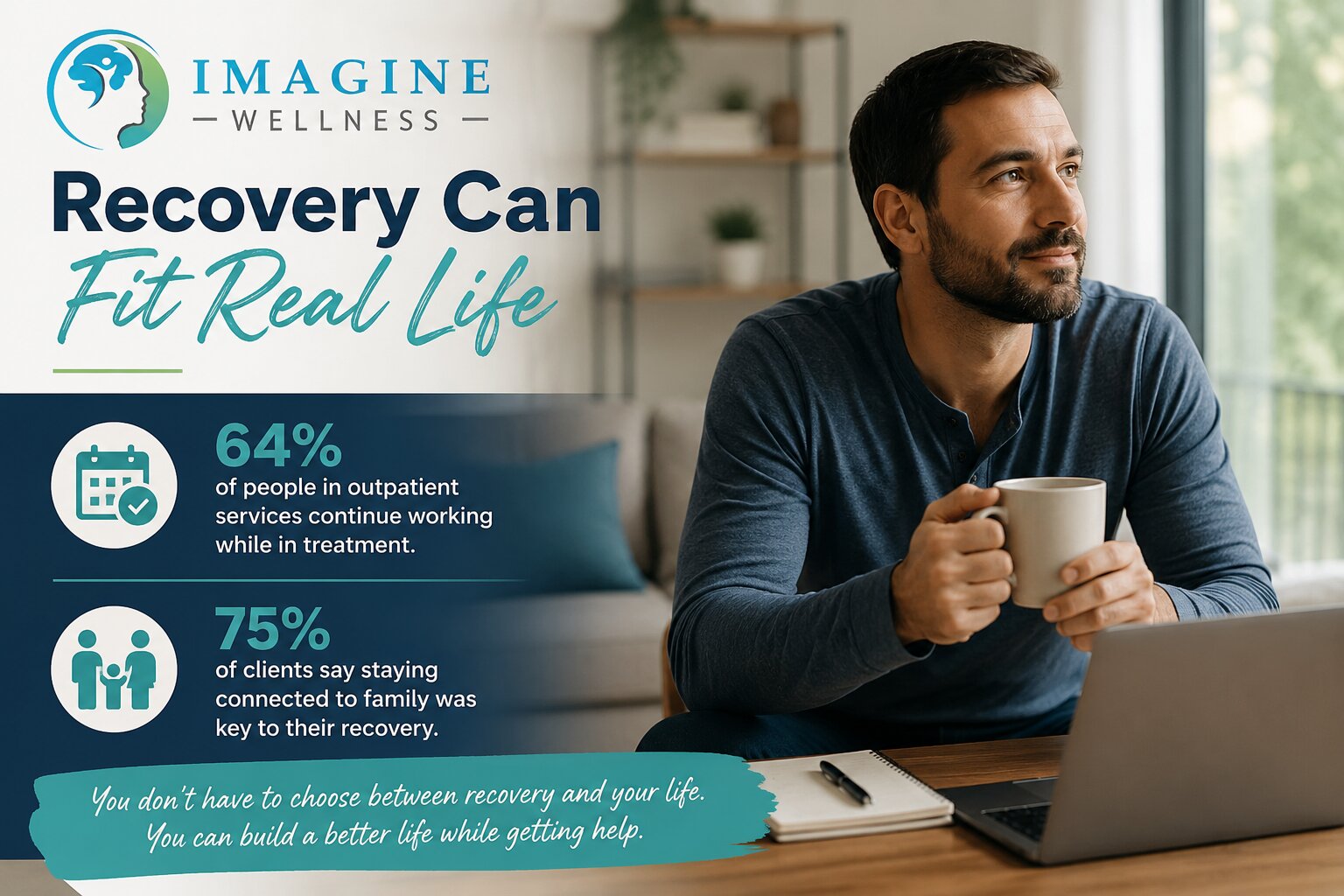
Your treatment plan should work with your life whenever possible.
Not against it.
Many people benefit from support that allows them to:
- Continue working
- Remain with family
- Sleep in their own home
- Maintain important responsibilities
- Apply recovery skills in real-world situations
One of the advantages of flexible treatment approaches is that people can practice what they’re learning while still living their everyday lives.
Instead of stepping away from responsibilities entirely, they learn how to navigate those responsibilities differently.
That distinction can be powerful.
Recovery doesn’t happen in a vacuum.
It happens in real life.
Why Flexible Support Works for Many People
People sometimes assume that if treatment isn’t disruptive, it can’t be effective.
The opposite is often true.
When support fits into someone’s schedule, they’re more likely to stay engaged.
Consistency matters.
Showing up matters.
Building momentum matters.
I’ve worked with people who initially believed they had no options because they couldn’t leave work.
A few months later, they were still employed, still parenting, still living at home, and making meaningful progress.
The difference wasn’t a miracle.
The difference was finding support that fit their reality.
The Success Story Most People Don’t Hear
When people think about recovery stories, they often imagine dramatic transformations.
Rock bottom.
Life-changing moments.
Sudden breakthroughs.
But many successful recovery stories are much quieter.
A mother starts attending sessions after work.
A father begins rebuilding trust with his children.
A business owner learns how to manage stress without drinking.
A client who disappeared from treatment finally answers the phone and decides to come back.
These victories rarely make headlines.
But they change lives.
One former client told me:
“I thought treatment meant putting my life on hold. Instead, it helped me get my life back.”
That’s a very different story than many people expect.
Step Four: Let Go of the Shame of Starting Again
If you’ve ghosted treatment before, you may be carrying shame.
A lot of it.
You may feel embarrassed about returning.
You may assume people will judge you.
You may believe you’ve already wasted your chance.
None of those beliefs are true.
Treatment professionals see this every day.
People leave.
Life gets complicated.
Fear takes over.
Schedules become overwhelming.
Then, sometimes weeks or months later, they come back.
Recovery is not reserved for people who get everything right the first time.
It’s available to people who are willing to keep trying.
The fact that you stopped before does not disqualify you from succeeding now.
Step Five: Focus on the Next Step, Not the Entire Journey
One reason people avoid treatment is because they try to solve everything at once.
They think about:
- Next month
- Next year
- Long-term sobriety
- Future challenges
- Permanent change
That’s a lot to carry.
Instead, focus on one question:
“What is the next right step?”
Not the next hundred steps.
Just the next one.
Recovery often unfolds the same way a road becomes visible in dense fog.
You don’t need to see the entire journey.
You only need enough visibility to move forward.
Support Doesn’t Require Leaving Your Life Behind
The idea that recovery requires abandoning work, family, and responsibilities keeps many people trapped longer than necessary.
In reality, support can often be integrated into daily life.
Many individuals explore flexible treatment options in Locations because they need care that acknowledges the realities of work schedules, parenting responsibilities, and personal commitments.
You shouldn’t have to choose between getting help and preserving what matters most.
For many people, that choice isn’t necessary.
Frequently Asked Questions
Can I recover from alcohol use while working full-time?
Many people do. Recovery support is available in various formats, and some options are designed specifically for individuals balancing work and personal responsibilities.
What if I already dropped out of treatment once?
You’re not alone. Many people leave treatment and later return successfully. A previous dropout does not determine your future outcome.
Do I need to leave my family to get help?
Not always. The appropriate level of care depends on your situation, symptoms, and recovery needs.
Is it worth returning after a relapse?
Yes. Relapse is often part of the recovery journey for many people. Returning to support can help you build on previous progress rather than starting from zero.
What if I feel embarrassed about coming back?
That feeling is very common. Treatment providers regularly work with individuals who are returning after time away and understand how difficult that step can be.
How do I know what level of support is right for me?
A professional assessment can help determine which type of care best fits your current circumstances, goals, and challenges.
Can treatment really fit around family responsibilities?
For many people, yes. Flexible support options are often designed to help individuals maintain important responsibilities while receiving care.
A Final Thought
If you’ve been telling yourself that recovery will have to wait until life becomes simpler, consider the possibility that life may never become simpler on its own.
Sometimes recovery is the thing that creates space for life to feel manageable again.
You do not need perfect timing.
You do not need perfect motivation.
You do not need a dramatic rock-bottom moment.
You only need a willingness to consider that support might fit your life better than you think.
Call 678-736-8983 or visit our programs, intensive outpatient services to learn more about our programs, intensive outpatient services in Fayetteville, GA.