

You can usually feel it before you fully understand it.
Something has changed.
Maybe your young adult barely sleeps anymore. Maybe they seem constantly on edge, emotionally exhausted, or suddenly overwhelmed by ordinary situations. Maybe panic attacks, emotional shutdowns, or angry outbursts have become part of daily life.
And underneath all of it, there’s often one quiet fear parents carry but rarely say out loud:
What if I’m losing them?
If you’ve been searching for answers, you are not alone. Families dealing with flashbacks, panic, and severe anxiety often spend months trying to understand what’s happening before they realize trauma may be sitting underneath it all.
Exploring help for trauma-related mental health struggles can be a first step toward clarity and support — not because your child is broken, but because overwhelming experiences can leave the nervous system stuck in survival mode long after the danger has passed.
Trauma Can Change Someone Without Warning
One of the hardest things for parents is watching their child slowly become unfamiliar.
You remember who they were before everything started feeling so heavy. Before the panic. Before the withdrawal. Before every conversation felt fragile.
Trauma responses can show up in ways families don’t always expect.
Some young adults become emotionally reactive and angry. Others go quiet. Some isolate in their room for hours. Others seem emotionally numb, detached, or exhausted all the time.
And because trauma affects the nervous system, reactions may not always “make sense” from the outside.
A crowded restaurant. A loud sound. A stressful conversation. Even something small can trigger overwhelming fear internally for someone whose brain no longer feels fully safe.
That’s what makes this experience so confusing for families.
You may feel like you’re trying to solve a puzzle without being able to see all the pieces.
Flashbacks Are Often More Subtle Than People Realize
When people hear the word “flashback,” they often picture dramatic movie scenes where someone completely relives a traumatic event.
But real-life flashbacks are often quieter and harder to recognize.
Sometimes they look like:
- Sudden panic attacks
- Emotional shutdown
- Dissociation or zoning out
- Fear that seems disconnected from the moment
- Intense reactions to reminders of past experiences
- Feeling mentally “stuck” somewhere painful
To the person experiencing them, flashbacks can feel terrifyingly real.
Their body reacts as though danger is happening again right now — even if logically they know they’re safe.
That’s why phrases like “just calm down” rarely help.
You cannot reason someone out of survival mode when their nervous system believes it’s protecting them from danger.
And honestly, many young adults struggling with trauma don’t fully understand what’s happening to them either.
That confusion can create even more fear.
Anxiety Has a Way of Taking Over Entire Households
Trauma doesn’t only affect the person experiencing it.
Families feel it too.
Parents often start adjusting their entire lives around unpredictability. You may monitor moods constantly. Avoid certain conversations. Worry every time your phone rings late at night. Stay awake listening for signs that something is wrong.
Over time, the whole house can start feeling emotionally tense.
Like everyone is holding their breath at the same time.
You may find yourself:
- Walking on eggshells
- Feeling emotionally exhausted
- Constantly worrying about making things worse
- Struggling to relax even during quiet moments
- Feeling guilty for not knowing how to help
Many parents blame themselves during this process.
You replay conversations in your head. Wonder if you missed warning signs. Question whether you should have done something differently years ago.
But trauma and severe anxiety are not parenting failures.
Sometimes painful experiences overwhelm a person’s ability to cope — even in loving families.
Young Adults Often Hide How Bad Things Really Feel
This part surprises many parents.
A lot of young adults struggling with flashbacks and anxiety become very good at masking it.
They may still go to work, attend classes, spend time with friends, or post normally online while privately feeling terrified inside.
Others isolate because they’re exhausted from pretending.
Some are scared to talk about what they’re experiencing because they fear:
- Being judged
- Becoming a burden
- Losing control emotionally
- Being misunderstood
- Reliving painful memories
Many young adults also worry that counseling means immediately talking about the worst moments of their lives in detail.
That fear alone stops many people from reaching out.
But healing is rarely about forcing someone to rip open every wound immediately.
Good support often begins much slower than people expect.
Healing Starts With Safety Before Anything Else
One of the most important things families should know is this:
Supportive counseling is not about pushing someone past their limits.
For many people, the first stage of healing involves stabilization and emotional safety. That may mean learning coping skills, improving sleep, managing anxiety symptoms, rebuilding trust, or simply creating enough calm for the nervous system to stop sounding constant alarms.
Think about what happens after a physical injury.
You don’t immediately run a marathon on a broken ankle. First you stabilize the injury. You create safety. You allow healing to begin gradually.
Emotional healing works similarly.
Many young adults dealing with trauma-related conditions need support learning how to feel safe in their own body again before deeper emotional work can happen.
That process takes patience.
And compassion.
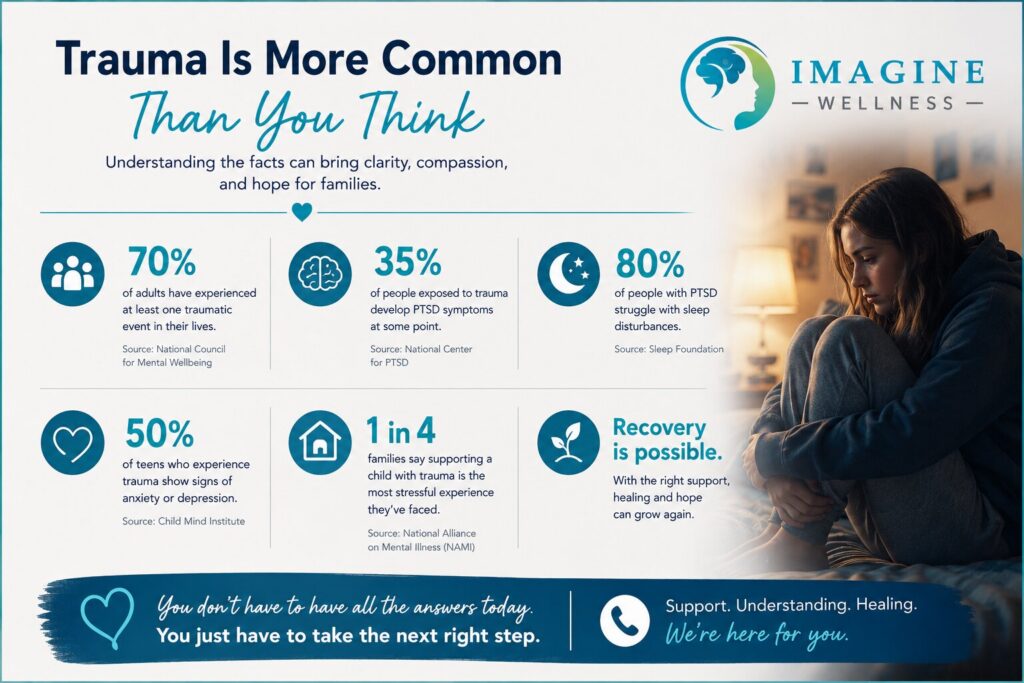
Trauma Can Affect the Body Just as Much as the Mind
A lot of people don’t realize how physical trauma responses can become.
Anxiety and flashbacks may cause:
- Racing heartbeat
- Muscle tension
- Exhaustion
- Digestive issues
- Dizziness
- Sleep problems
- Difficulty concentrating
- Feeling constantly “on guard”
Over time, the body becomes exhausted from staying in survival mode for so long.
Imagine driving a car with the emergency brake partially engaged every single day. Eventually the engine overheats.
That’s what chronic fear can do to the nervous system.
Many young adults living with unresolved trauma feel deeply tired — physically, mentally, and emotionally — long before they know how to ask for help.
And parents often feel worn down right alongside them.
Healing Rarely Happens in One Straight Line
This can be difficult for families to hear because when someone you love is struggling, you want immediate relief.
But trauma recovery usually isn’t linear.
There may be progress followed by difficult days. Moments of hope followed by emotional setbacks. Times when your child seems more engaged, then suddenly withdrawn again.
That doesn’t always mean nothing is working.
Healing often happens quietly at first:
- Sleeping through the night again
- Leaving the house with less panic
- Feeling emotionally connected for a few moments longer
- Learning how to calm overwhelming anxiety
These small changes matter.
Think of the nervous system like a smoke alarm that became overly sensitive after a fire. The alarm isn’t “bad.” It adapted to survive.
The goal isn’t to shame someone for being overwhelmed.
The goal is to help their brain and body slowly relearn safety over time.
What Parents Can Do Right Now
You do not need perfect answers to support your child.
And honestly, most young adults are not looking for perfect words. They’re looking for emotional safety.
A few things that can help:
- Listen without immediately trying to fix everything
- Avoid minimizing their fears
- Stay calm during panic moments if possible
- Encourage small steps instead of demanding huge changes
- Remind them they do not have to carry this alone
It’s also important to care for yourself.
Parents navigating behavioral health crises often run on fear and adrenaline for months or years at a time. That level of stress affects your nervous system too.
You deserve support while supporting someone else.
That’s not selfish.
It’s necessary.
Looking for PTSD Counseling in Atlanta Can Feel Overwhelming
Searching for help usually happens during a hard moment.
Maybe after another sleepless night. Another panic attack. Another emotional conversation that left everyone scared and exhausted.
Families across Atlanta are navigating these same fears every day. And while every situation is different, compassionate support can help people feel less trapped by anxiety, flashbacks, and overwhelming emotional distress.
The goal is not perfection overnight.
It’s helping someone slowly reconnect with safety, stability, and themselves again.
And sometimes hope starts quietly.
Not with some dramatic breakthrough.
Just with one person finally saying:
“We don’t have to keep surviving this alone anymore.”
FAQ: PTSD Counseling, Flashbacks, and Anxiety
What causes flashbacks to happen?
Flashbacks are often triggered by reminders connected to past traumatic experiences. Sounds, smells, places, emotions, or stressful situations can activate the brain’s survival response even when no current danger exists.
Can trauma cause severe anxiety years later?
Yes. Trauma responses do not always appear immediately. Some people experience anxiety, panic attacks, hypervigilance, or emotional shutdown months or even years after difficult experiences.
Why does my child seem emotionally disconnected?
Trauma can affect emotional regulation and a person’s ability to feel safe connecting with others. Some people become withdrawn or numb as a way of protecting themselves emotionally.
What if my child refuses counseling?
Resistance is common, especially when someone feels ashamed, overwhelmed, or afraid. Gentle conversations and emotional support usually help more than pressure or ultimatums.
Does counseling force people to relive trauma immediately?
Not necessarily. Many therapists focus first on emotional stabilization, safety, coping skills, and trust-building before exploring traumatic memories in depth.
Can trauma symptoms affect physical health?
Yes. Anxiety and trauma-related conditions can impact sleep, digestion, energy levels, concentration, appetite, and overall physical well-being.
Is it normal for parents to feel overwhelmed too?
Absolutely. Supporting a child through emotional struggles can be exhausting and frightening. Many parents experience anxiety, grief, guilt, and emotional burnout during this process.
How do I know if professional support may help?
If flashbacks, anxiety, panic, emotional shutdown, or fear are interfering with daily life, relationships, school, work, or emotional well-being, reaching out for professional guidance can help families better understand what’s happening and what support options may exist.
If your family is exploring help for flashbacks, anxiety, or trauma-related conditions, Imagine Wellness Centers offers compassionate support designed to meet people where they are emotionally — without judgment or pressure.
Call 678-736-8983 or visit our help for trauma-related mental health struggles to learn more about our conditions, trauma services in Atlanta.