
From the outside, everything looks impressive.
The career is steady. The responsibilities are handled. Messages get answered. Deadlines are met. People rely on you—and you deliver.
Friends call you driven. Coworkers trust you. Family assumes you’re doing fine.
But high-functioning people often know a quiet truth most others miss.
You can be successful and still be struggling.
In fact, many of the people who eventually reach out for help start exactly here—holding their lives together while quietly searching for something like multi-day weekly treatment that allows them to get support without disappearing from work, family, or daily responsibilities.
Because success doesn’t protect anyone from burnout, addiction, or emotional overload.
It just hides it better.
The Lie Hidden Inside the Word “Functional”
“High-functioning” sounds like praise.
It suggests capability. Strength. Control.
But in many cases, the word hides something else: someone carrying far more than people realize.
High-functioning individuals often maintain impressive lives while struggling privately with alcohol, stress, anxiety, or substance use.
They continue to perform.
They continue to succeed.
But behind the scenes, maintaining that image requires increasing effort.
Imagine spinning plates on long sticks. At first it feels manageable. But the more plates you add—career, relationships, stress, expectations—the more attention it takes just to keep everything upright.
Eventually, the effort becomes exhausting.
And exhaustion has a way of revealing truths we’ve been avoiding.
Success Can Hide a Growing Problem
One reason high-functioning people delay getting help is simple.
Their lives still look stable.
There’s still a job. Still relationships. Still daily routines.
So the internal logic becomes:
If things were really bad, my life would be falling apart.
But addiction and mental health struggles don’t always start with chaos.
Sometimes they grow slowly behind a successful exterior.
People compensate. They push harder. They hide discomfort well enough that no one else notices.
Meanwhile, the internal pressure keeps building.
Eventually the question changes.
It’s no longer “Is my life falling apart?”
It becomes:
“How long can I keep this up?”
The Quiet Cost of Holding Everything Together
High-functioning individuals rarely experience sudden collapse.
Instead, they experience slow emotional erosion.
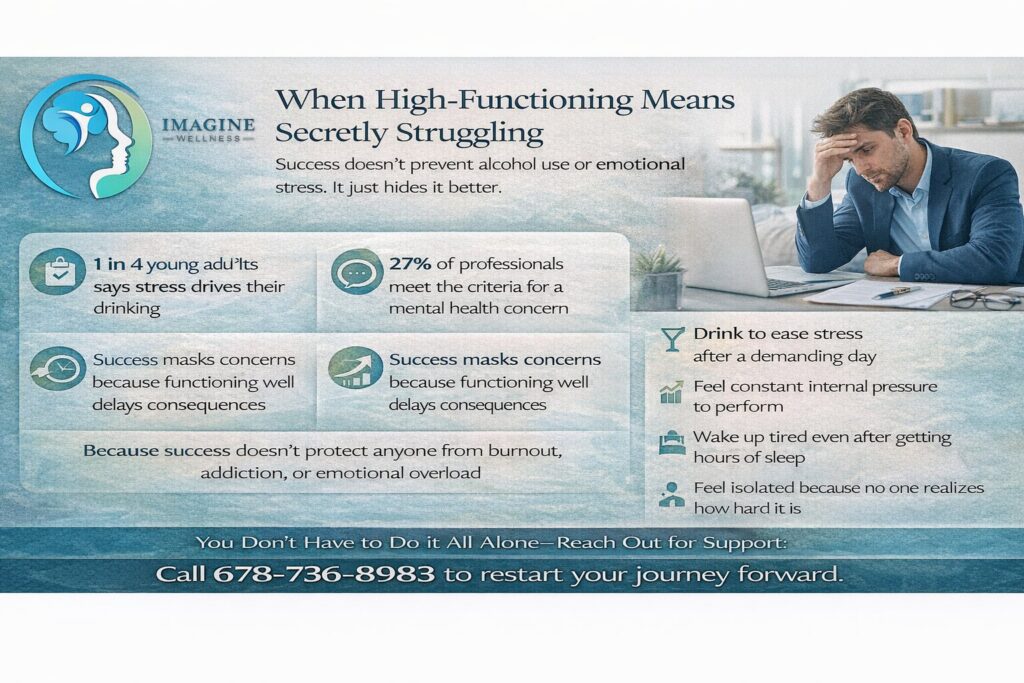
The signs often show up quietly:
- relying on alcohol or substances to unwind after stressful days
- waking up tired despite getting enough sleep
- feeling constant pressure to maintain an image of success
- experiencing anxiety that never fully shuts off
- feeling disconnected even while surrounded by people
From the outside, everything appears stable.
Inside, the system is running hot.
One client once explained it this way:
“It felt like I was driving a car with the engine redlining all the time. Eventually you know something’s going to break.”
That awareness often becomes the first turning point.
Why High-Achieving People Wait So Long
Many successful professionals struggle with one particular belief.
They think they should be able to fix everything themselves.
After all, their lives are built on problem-solving, discipline, and independence. Asking for help can feel unfamiliar—or even uncomfortable.
Some common fears include:
- worrying that treatment will disrupt their career
- feeling embarrassed to admit they’re struggling
- believing their problems aren’t “serious enough”
- fearing they’ll lose control of their schedule or routine
These fears keep many people stuck longer than necessary.
But there’s another truth many high-functioning individuals eventually discover:
Strength isn’t the ability to handle everything alone.
Sometimes strength is the willingness to stop pretending everything is fine.
The Moment the Mask Gets Heavy
Most high-functioning individuals don’t reach out during dramatic crises.
The decision usually comes during quiet moments.
A night where sleep won’t come.
A morning when exhaustion feels overwhelming.
A realization that alcohol has become less about enjoyment and more about coping.
In those moments, something shifts internally.
The conversation changes from denial to curiosity.
What if I didn’t have to manage this alone?
That question opens the door to change.
Why Structured Support Appeals to High-Functioning People
One reason many professionals hesitate to seek help is the assumption that treatment requires stepping away from everything.
They imagine putting their lives on hold.
But many recovery options are designed for people who still need to maintain daily responsibilities.
Structured programs that meet several days per week allow individuals to:
- continue working
- remain connected to family life
- maintain many daily routines
- receive professional support and accountability
For many successful individuals, that balance makes recovery feel realistic instead of overwhelming.
In those situations, an Intensive outpatient program often becomes the environment where high-performing individuals can finally lower the pressure they’ve been carrying alone.
And for many, that relief is immediate.
Success Doesn’t Protect You From Burnout
High-functioning individuals often believe their achievements prove they’re okay.
But success and struggle are not opposites.
Many high-performing people live under constant pressure:
- demanding careers
- financial responsibilities
- leadership roles
- family expectations
- internal perfectionism
Alcohol or substances can easily become a coping mechanism for managing that pressure.
At first, it feels like stress relief.
Over time, it becomes something closer to maintenance.
And when coping becomes dependence, life starts to feel smaller instead of bigger.
The Truth Most People Discover
When successful people finally seek help, they often discover something surprising.
They don’t lose their lives.
They regain them.
Without the constant pressure of hiding struggles or managing unhealthy coping habits, many individuals experience improvements in:
- focus and clarity
- emotional stability
- sleep and physical health
- relationships and communication
- long-term professional performance
In other words, the thing they feared would derail their success often strengthens it.
Recovery doesn’t erase ambition.
It supports it.
You Don’t Have to Fall Apart First
One of the biggest myths surrounding addiction and mental health is the idea that people must reach rock bottom before asking for help.
But many people choose support long before their lives collapse.
Sometimes the only signal is a quiet realization:
I’m tired of carrying this alone.
That moment matters.
It means you’re paying attention.
And attention is often the first real step toward change.
Frequently Asked Questions
Can someone be successful and still struggle with addiction?
Yes. Many high-functioning individuals maintain careers, relationships, and responsibilities while privately dealing with alcohol or substance use issues.
Why do high-functioning people often delay getting help?
Success can make struggles easier to hide. Without major consequences, many people convince themselves their situation isn’t serious enough to address.
What are common signs of high-functioning substance use problems?
Common signs include using alcohol to cope with stress, constant exhaustion, anxiety, difficulty sleeping, and feeling pressure to maintain a successful image.
Will seeking help disrupt my career or responsibilities?
Many people choose treatment options designed to fit around work schedules and daily life responsibilities.
How do people know it’s time to get support?
If alcohol or substances have become a regular way to manage stress—or if maintaining control feels exhausting—it may be worth exploring professional support.
Do successful people actually enter recovery programs?
Yes. Many professionals, executives, and high-achieving individuals seek structured support to address substance use or mental health concerns while maintaining their responsibilities.
Ready to Talk About What Comes Next?
If you’re successful on the outside but struggling behind the scenes, you’re not alone—and support exists that fits real life.
Call 678-736-8983 or visit our Intensive outpatient program services to learn more about our Intensive outpatient program services in Atlanta, GA.