

Relapse has a way of rewriting the story in your head.
When it happened to me, the loudest voice wasn’t addiction. It was shame.
You already had your chance.
I had done the work before. I had the sober days, the therapy sessions, the encouraging messages from people who believed in me. For a while, it felt like things were finally moving in the right direction.
So when I relapsed, the first feeling wasn’t fear.
It was embarrassment.
I thought the story was over. I thought I had already used up my opportunity to get better.
But eventually I found myself walking back into structured daytime care. And what happened the second time changed my understanding of recovery completely.
The First Time I Thought Recovery Was About Getting It Right
The first time I entered treatment, I treated it like a project.
I listened carefully in groups.
I wrote notes during therapy sessions.
I repeated the right language about accountability and growth.
From the outside, I probably looked committed.
But if I’m honest, I was still trying to manage recovery the same way I managed everything else in my life.
Through control.
Part of me believed that if I worked hard enough, said the right things, and followed the structure perfectly, I could outmaneuver addiction.
And for a while, it looked like it worked.
Ninety days sober. People congratulating me. My life slowly becoming stable again.
But recovery doesn’t reward performance.
It rewards honesty.
And at that point, I still had some truths I wasn’t ready to say out loud.
The Quiet Drift That Came Before the Relapse
Most people imagine relapse as a sudden event.
But for many of us, it begins quietly long before the substance ever appears.
Mine started with distance.
I stopped calling the people who supported me. I skipped a meeting because I was “busy.” Then I skipped another one because I convinced myself I didn’t need it as much anymore.
Recovery slowly moved from the center of my life to the edges.
At the time, those decisions felt small.
But small decisions have momentum.
And eventually, that momentum pulled me back toward old habits.
When the relapse finally happened, it felt like everything I had built collapsed at once.
Shame Is a Powerful Voice
After the relapse, the shame was immediate.
Not just because I had used again—but because I felt like I had let everyone down.
People who supported me.
People who believed in me.
People who told me recovery was possible.
The voice in my head kept repeating the same message.
You already tried this. Why would it work now?
For a while, that voice kept me away from getting help again.
I convinced myself that going back would be humiliating.
That everyone would see me as the person who couldn’t do it.
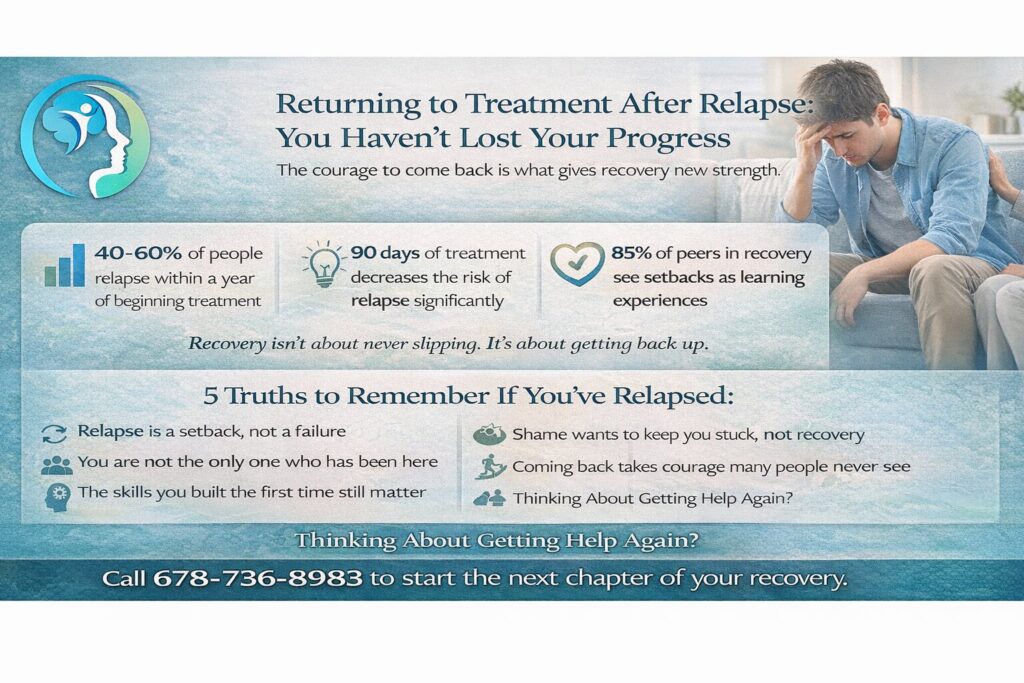
Walking Back Through the Door
Eventually something shifted.
I realized that staying stuck in shame was only pushing me further away from the life I wanted.
So I made the call.
Walking back into treatment felt heavier than the first time.
The first time, I was scared.
The second time, I was humbled.
I kept imagining how people would react when they saw me again. I expected disappointment or judgment.
But that’s not what happened.
Instead, I heard something simple.
“We’re glad you came back.”
That sentence stayed with me.
Because in that moment, I realized recovery wasn’t a test you pass or fail.
It’s something you keep returning to.
What Changed the Second Time Around
The second time in treatment felt completely different.
Not because the program had changed.
Because I had.
The first time, I was trying to prove I could recover.
The second time, I was ready to admit I couldn’t do it alone.
That shift made everything deeper.
In group sessions, I spoke more honestly about my fears. I talked about the loneliness that had crept in before my relapse. I admitted the parts of recovery that still scared me.
And something surprising happened when I stopped pretending to be strong.
The support around me grew stronger too.
The Lessons That Only Relapse Taught Me
Relapse doesn’t erase what you learned the first time.
In many ways, it reveals it.
When I returned to treatment, I noticed something important. The coping tools I had learned before were still there.
I still recognized my triggers.
I still understood how stress affected my decisions.
I still knew what isolation could lead to.
The difference was that I finally respected those warning signs.
The first time I learned the lessons.
The second time I believed them.
Humility Is a Different Kind of Strength
Coming back after relapse requires courage most people never see.
It’s easy to seek help when you’re hopeful.
It’s harder when you’re ashamed.
But humility has a way of opening doors that pride keeps closed.
The second time around, I stopped trying to look like someone who had everything under control.
Instead, I focused on being honest about what I needed.
For many people returning to treatment, the structure and consistency of a Partial hospitalization program provides the support needed to rebuild stability and reconnect with recovery in a deeper way.
It doesn’t feel like starting over.
It feels like continuing with more wisdom.
Recovery Is a Longer Story Than One Relapse
One of the biggest lies addiction tells us is that relapse means the end.
But recovery isn’t one moment.
It’s a long story with many chapters.
Some chapters are strong and hopeful.
Others are messy and painful.
But none of them erase the others.
If anything, the difficult chapters often become the ones that shape the strongest recovery.
Because they teach something simple and powerful.
You can fall down and still get back up.
If You’re Afraid to Come Back
If you’ve relapsed after treatment, you might feel like you’ve ruined your progress.
You might feel embarrassed to reach out again.
You might wonder whether anyone will believe in you this time.
But recovery communities see this moment differently.
Coming back isn’t failure.
It’s courage.
It means you’re still fighting for your life, even when things didn’t go the way you hoped.
And that fight matters.
Frequently Asked Questions
Is relapse common after treatment?
Yes. Many people experience relapse during their recovery journey. While it can feel discouraging, relapse often becomes an opportunity to learn more about triggers and strengthen future recovery.
Does relapse erase progress from treatment?
No. The skills, insights, and coping strategies learned during treatment remain valuable even if someone relapses. Many people return to recovery stronger because of what they learned.
Why do some people return to treatment after relapse?
Returning to treatment can help individuals reconnect with support systems, rebuild structure, and address the challenges that contributed to relapse.
Is it harder to return to treatment the second time?
Emotionally, it can feel more difficult because of shame or self-doubt. However, many people find the second experience more meaningful because they approach recovery with greater honesty.
What helps people succeed after relapse?
Strong support systems, ongoing therapy, honest communication about struggles, and consistent recovery routines can all help people rebuild stability.
Can recovery still succeed after relapse?
Absolutely. Many long-term recovery stories include setbacks. What matters most is the willingness to return to support and continue moving forward.
Ready to Take the Next Step?
If you or someone you love is considering returning to treatment after relapse, support is available.
Call 678-736-8983 or visit our Partial hospitalization program services to learn more about our Partial hospitalization program services in Atlanta, GA.