

There’s a specific kind of heartbreak that comes after relapse.
It’s not loud.
It’s not always visible.
It’s not something most people around you fully understand.
It’s the moment you realize:
“I can’t fix this just by loving them harder.”
If your child has started using again, you’re likely carrying a mix of fear, confusion, and exhaustion that doesn’t really turn off.
You’re watching someone you love struggle — again — and trying to figure out what actually helps now.
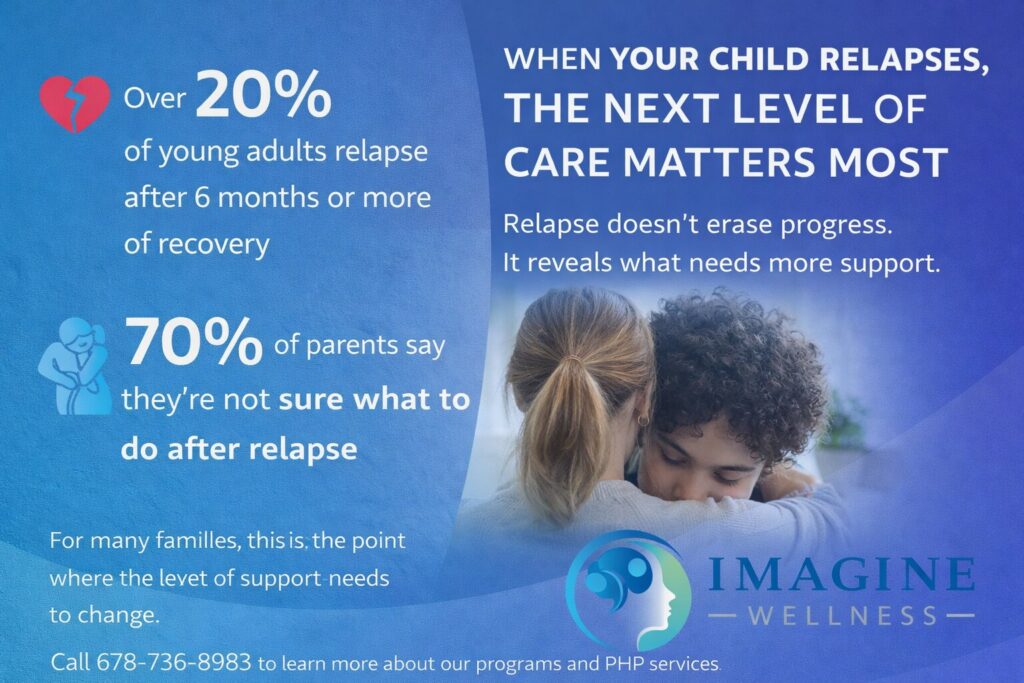
For many families, this is the point where the level of support needs to change.
That’s often when options like daytime treatment support start to make more sense.
Relapse Feels Like the Ground Disappeared — But It Didn’t
Relapse can feel like everything you hoped for just collapsed.
Like all the progress, all the effort, all the moments of relief… didn’t hold.
But here’s what we want you to understand:
Relapse doesn’t erase progress.
It exposes what wasn’t strong enough yet.
That distinction matters.
Because instead of asking, “What went wrong?”
It shifts the question to:
“What’s missing right now?”
And usually, the answer isn’t love.
It’s structure, consistency, and the right level of care.
Why Progress Can Be Real — And Still Not Last
This is one of the most confusing parts for parents.
Because you saw it.
Your child was:
- More present
- More engaged
- More like themselves
So how did things fall apart again?
Often, it’s not about willingness.
It’s about sustainability.
Early recovery requires more support than most people expect.
And when that support isn’t consistent enough throughout the day, the pressure builds.
Old habits don’t come back because your child “chose them.”
They come back because the system around them wasn’t strong enough to hold the change yet.
The Gap Between Sessions Is Where Things Often Slip
This is something families don’t always see clearly at first.
If your child is only receiving support occasionally, there are long stretches of time where they’re left to manage everything on their own.
That gap matters.
Because in those hours:
- Stress builds
- Triggers go unprocessed
- Emotions escalate without support
And eventually, those gaps become where relapse happens.
Not because they didn’t care.
Because they didn’t have enough support in the moments it mattered most.
Why More Structure Isn’t Punishment — It’s Protection
When parents hear that their child may need more structured care, it can feel discouraging.
Like things are getting worse.
Like:
- “Why do they need this now?”
- “Shouldn’t they be doing better?”
But more structure isn’t about something being wrong with your child.
It’s about creating the conditions where stability can actually happen.
More consistent support helps:
- Reduce exposure to high-risk environments
- Provide real-time guidance during difficult moments
- Build routines that don’t rely on willpower alone
It’s not about control.
It’s about support that shows up consistently — not just occasionally.
What This Level of Care Changes Day-to-Day
For many young adults, this kind of support creates something they’ve been missing:
A steady rhythm.
Instead of:
- Long, unstructured days
- Isolation or unpredictability
- Trying to “figure it out” alone
They have:
- A consistent place to go
- Regular support throughout the day
- Less time spent in environments that pull them backward
It’s not magic.
But it is stabilizing.
And stability is what makes progress possible.
Why This Step Often Brings Mixed Emotions for Parents
It’s completely normal to feel conflicted.
You might feel:
- Relief that there’s an option
- Fear about what it means
- Guilt for not knowing sooner
- Doubt about whether it will work
All of that can exist at the same time.
But choosing more support isn’t giving up on your child.
It’s adjusting to what they need right now.
And that’s one of the most loving things you can do.
What We See When Families Take This Step
We’ve walked with many families through this exact moment.
A relapse happens.
Everything feels uncertain again.
The future feels fragile.
And then something shifts.
With the right level of support:
- Days start to feel more predictable
- Emotional swings become more manageable
- Small wins begin to return
- Families feel less alone in the process
It’s not instant.
But it’s steady.
And steady is what creates real change.
You Were Never Meant to Carry This Alone
Parents often step into overdrive after relapse.
Watching. Monitoring. Trying to prevent the next mistake.
It’s exhausting.
And it’s not sustainable.
The right kind of care doesn’t replace you.
It supports you.
So you’re not the only one holding everything together.
So your role can shift from crisis manager… back to parent.
This Isn’t the End — It’s a Turning Point
Right now, it might feel like you’re back at the beginning.
But you’re not.
You have more clarity now:
- You’ve seen what doesn’t hold
- You understand the patterns more clearly
- You know your child needs more support than before
That’s not failure.
That’s direction.
And it can guide you toward something that actually works this time.
If you’re considering next steps after relapse, you can explore options like programs, php services.
Frequently Asked Questions
Does relapse mean treatment didn’t work?
No. Relapse often means the level of support wasn’t enough to sustain progress long-term. It doesn’t erase what your child learned — it highlights what needs to change going forward.
Why would my child need more support now than before?
Because recovery needs can change. Sometimes initial care helps stabilize things, but ongoing or increased support is needed to maintain that stability in real life.
Is this level of care too much for my child?
It’s not about “too much.” It’s about matching the level of care to the level of need. If your child is struggling to stay stable between sessions, more consistent support can actually make things feel more manageable — not more overwhelming.
What if my child resists going back into treatment?
Resistance is common. It doesn’t always mean they don’t want help. It often means they feel overwhelmed, discouraged, or unsure. Having the right approach and support system can help ease that transition.
Can things actually get better after relapse?
Yes. Many people find stronger, more sustainable recovery after relapse — especially when the level of care is adjusted to meet their needs. Relapse can be a turning point, not an endpoint.
You Didn’t Fail Them — And This Isn’t Over
If you’re here, it means you care deeply.
It means you’re paying attention.
It means you’re still looking for a way forward.
That matters more than you think.
Your child’s story is still unfolding.
And this moment — as hard as it is — can still lead somewhere better.
Call 678-736-8983 or visit our page to learn more about our programs, php services in Atlanta, GA.