
I didn’t relapse because I wanted to.
That’s the part I wish someone had told me sooner—that relapse doesn’t always come from craving something. Sometimes it comes from not understanding what you’re feeling… and trying to escape it any way you can.
If you’ve been sitting in that low, searching things like “therapy for constant low mood and zero motivation near me,” you’re not alone. I was there too, quietly trying to make sense of something I couldn’t name. At one point, I came across support for depression and related conditions, but I didn’t fully understand yet how much that applied to me.
I thought I was just tired.
I wasn’t.
I Hit 90 Days… and Then Something Shifted
You hear a lot about the first 30 days. The first 60. The big milestones.
But no one really prepares you for what can happen after the noise settles.
At 90 days, my life looked better on paper:
- I wasn’t using
- I was showing up
- People trusted me again
But inside?
It felt like someone turned the lights down.
Not off. Just dim enough that everything felt dull and distant.
I kept waiting for the feeling to pass.
It didn’t.
It Didn’t Feel Like Sadness—It Felt Like Nothing
That’s what confused me the most.
I wasn’t crying all the time. I wasn’t falling apart.
I just… didn’t feel much of anything.
- Things I used to enjoy felt like chores
- Conversations felt like effort
- Even small decisions felt heavy
It was like trying to live life through a fog that wouldn’t lift.
I told myself:
“This is just part of recovery.”
But deep down, something felt off.
The Quiet Drift Backwards
Relapse didn’t hit me all at once.
It crept in.
First, I stopped doing the things that were helping me:
- Skipping a meeting here and there
- Ignoring texts
- Telling myself I just needed space
Then I started isolating.
Not in a dramatic way. Just enough to lose connection.
That’s the thing about this kind of slide—it doesn’t feel urgent. It feels reasonable.
And that’s what makes it dangerous.
I Thought I Was Failing Recovery
This part still stings a little.
I thought the problem was me.
I thought:
- I’m not trying hard enough
- Other people are doing better than me
- Maybe I’m just not built for this
So I doubled down on willpower.
Tried to push through it. Stay disciplined. Stay positive.
But you can’t outwork something you don’t understand.
What I Didn’t Know About My Own Mind
No one had really explained what depression could look like for me.
I thought it was obvious. Loud. Visible.
But mine was quiet.
It looked like:
- Constant fatigue that didn’t make sense
- Zero motivation, even for things I cared about
- Feeling disconnected from people I loved
- A low-level heaviness that never fully lifted
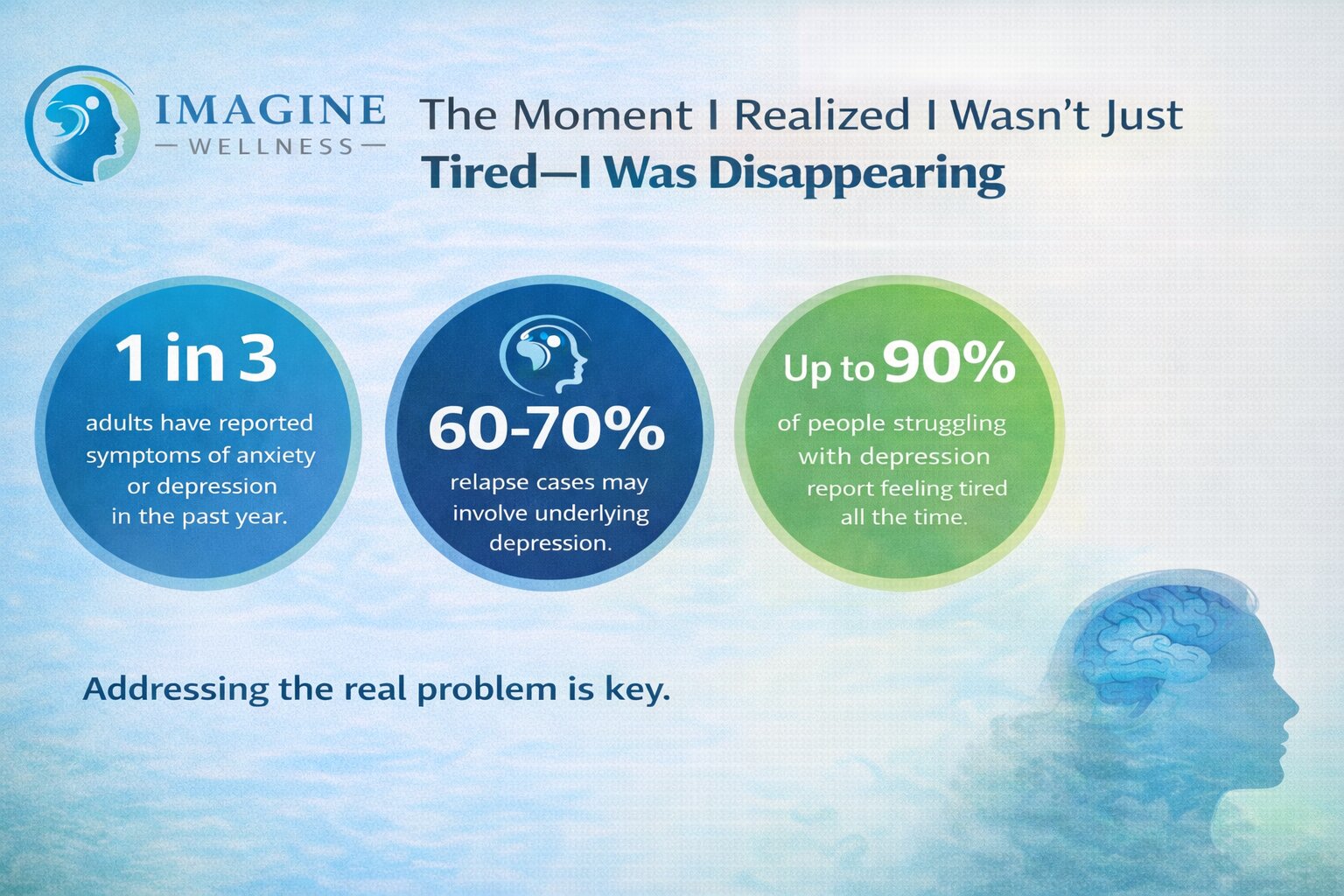
And because it didn’t match what I thought depression was, I didn’t recognize it.
I just kept pushing.
The Thought That Changed Everything
It wasn’t dramatic.
It was a small, almost casual thought:
“I just need a break from feeling like this.”
That’s what led me back.
Not excitement. Not desire.
Relief.
And that’s the part people don’t talk about enough.
Sometimes relapse isn’t about chasing something—it’s about trying to escape something you don’t have words for.
When Everything Finally Made Sense
After I came back, I had to get honest in a way I hadn’t before.
I said:
“I don’t think this is just about staying sober. I think something else is going on.”
That was the turning point.
Instead of just focusing on not using, I started looking at my mental health in a real way.
And for the first time, things started to click.
The low mood. The lack of motivation. The numbness.
It wasn’t a personal failure.
It was something that needed attention.
What Changed the Second Time Around
The second time wasn’t easier.
But it was clearer.
I stopped trying to force myself into a version of recovery that didn’t fully fit me.
Instead, I focused on understanding:
- What triggers that low, empty feeling
- What helps me reconnect when I start to shut down
- How to ask for help before things spiral
I also realized I needed more support than I thought.
Not forever. But enough to stabilize what I was dealing with underneath.
And that made all the difference.
If You’re Sitting in That Low Right Now
If you feel stuck…
If everything feels heavy or flat…
If you’re doing the “right things” but still struggling underneath…
I need you to hear this:
You’re not broken. And you didn’t ruin everything.
You might just be dealing with something that hasn’t been fully understood yet.
And that’s something you can work with.
You’re Not Back at Day One
It feels like that.
I know it does.
Relapse has a way of making everything you built feel like it disappeared overnight.
But it didn’t.
You still have:
- Awareness
- Experience
- The ability to recognize when something feels off
That matters more than you think.
This isn’t starting over.
This is starting again—with more truth.
FAQ: What You Might Be Wondering Right Now
Did I relapse because I didn’t try hard enough?
No. Effort isn’t the issue here. Sometimes relapse happens because something deeper—like untreated depression—isn’t being addressed.
How do I know if what I’m feeling is more than just recovery ups and downs?
If the low mood feels constant, if motivation is gone, or if things feel flat for weeks at a time, it’s worth looking deeper. Trust patterns, not just moments.
Why didn’t I notice this before?
Because it doesn’t always show up the way we expect. A lot of people think depression is obvious. For many of us, it’s quiet and easy to misread.
What if I’m scared to start again?
That makes sense. Coming back can feel heavy. But you’re not coming back as the same person—you’re coming back with more understanding of what you actually need.
What kind of help should I be looking for now?
Support that looks at both recovery and mental health together. Sometimes that means more consistent care for a period of time—not just occasional check-ins.
A Different Way Forward
If this feels familiar, it might be time to look at what’s underneath—not just what happened.
You can call 678-736-8983 or visit our page on conditions, depression services in Peach Tree, Georgia to learn more about support that meets you where you actually are—not where you think you’re supposed to be.
You didn’t relapse because you wanted to.
You relapsed because something needed attention.
And now—you have a chance to actually give it that.