
On paper, everything looks fine.
You’re working. Showing up. Responding to messages. Keeping your life moving in a way most people would call “together.”
No one is worried about you.
That’s what makes this so hard to name.
Because inside, there’s a growing sense that something isn’t lining up anymore.
Not broken.
Not out of control.
Just… off.
And if you’re honest, it’s been building for a while.
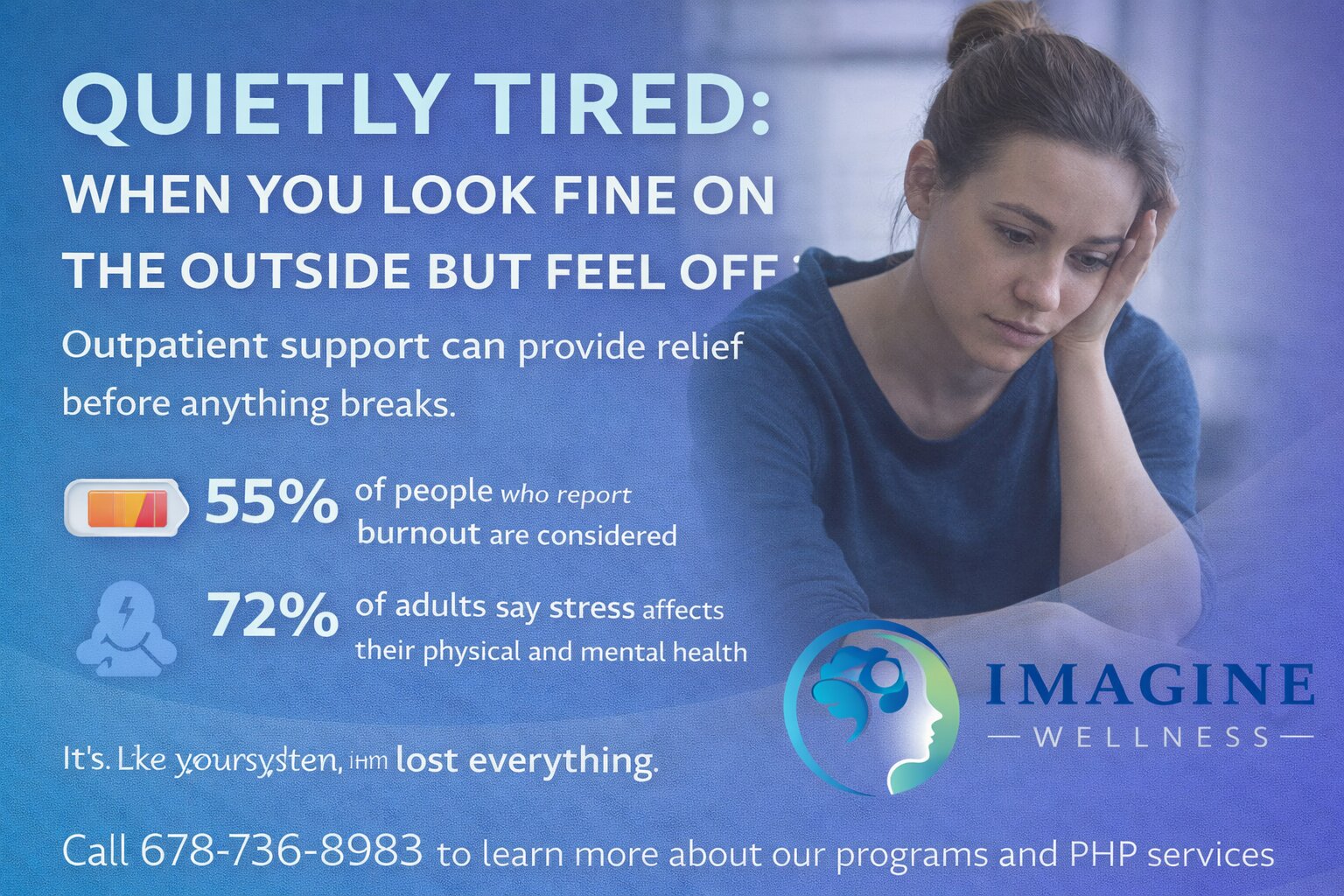
That quiet awareness — not a crisis, not a collapse — is where many high-functioning people begin considering options like flexible outpatient support.
Not because they’ve lost everything.
Because they’re tired of holding everything together.
It Starts With a Kind of Tired You Can’t Fix
This isn’t normal tired.
It’s not solved by a weekend off or a good night’s sleep.
It’s deeper than that.
You might notice:
- You wake up already mentally “on”
- Even downtime feels slightly tense
- You’re always recovering from something — work, socializing, your own thoughts
It’s like your system never fully powers down.
And at first, you push through it.
Because that’s what you do.
But over time, pushing through starts to feel like dragging something heavy behind you.
You Realize You’re Managing More Than Anyone Sees
From the outside, your life looks steady.
From the inside, it feels managed.
There’s a difference.
You’re not just:
- Going to work
- Handling responsibilities
You’re also:
- Monitoring how you feel so it doesn’t show
- Adjusting your behavior in real time
- Keeping your emotions within a narrow, “acceptable” range
It’s constant.
Like running a second system underneath everything else.
And eventually, you notice how much energy it takes just to stay level.
The Line Between “Fine” and “Numb” Gets Blurry
At some point, things don’t feel sharp anymore.
Not in a dramatic way.
In a quiet one.
You might notice:
- You don’t feel as excited about things you used to enjoy
- Conversations feel more surface-level, even when they matter
- You’re present… but not fully there
Or the opposite happens.
Everything feels intense — so you find ways to dial it down just enough to function.
Either way, something shifts.
You’re still operating.
But you’re not really experiencing life the same way.
You Start Explaining It Away — Even to Yourself
This part is subtle.
You become very good at normalizing what’s happening.
You tell yourself:
- “It’s just stress.”
- “Everyone feels like this sometimes.”
- “I’m still doing what I need to do.”
And those things might be true.
But they don’t cancel out the deeper feeling:
This isn’t sustainable.
That thought doesn’t usually come all at once.
It builds.
Quietly.
The Cost Shows Up in Small, Personal Ways
High-functioning doesn’t mean unaffected.
It just means the impact is less visible.
You might notice:
- You’re less patient than you used to be
- You feel disconnected in relationships that matter
- You don’t recognize yourself in certain moments
Nothing is “falling apart.”
But pieces of your life start to feel thinner.
Less solid.
Less you.
And that’s when the cost becomes harder to ignore.
You Catch Yourself Wondering If Life Could Feel Different
This is the turning point.
Not a breakdown.
A question.
“What if this didn’t have to feel this hard?”
It’s not about wanting everything to be perfect.
It’s about wanting:
- Less effort just to feel okay
- Less tension in your body
- Less need to constantly manage yourself
That question can feel small.
But it’s not.
It’s the beginning of change.
You Don’t Want to Wait for Something to Force You
A lot of people stay in this space for a long time.
Because nothing is forcing them to change.
No crisis. No consequences big enough to demand action.
But here’s what we’ve seen:
The people who come in at this stage — before things break — often experience a different kind of progress.
Not rushed. Not reactive.
Intentional.
They’re not trying to rebuild.
They’re trying to realign.
And that matters.
The Turning Point Is Quiet — But It’s Real
There’s a misconception that change only happens when things fall apart.
But for high-functioning people, it’s rarely like that.
It’s quieter.
It’s:
- Noticing the exhaustion
- Feeling the disconnect
- Realizing you don’t want to keep living like this
That’s the turning point.
Not failure.
Not weakness.
Awareness.
And awareness is what allows you to choose something different.
If you’re in that space, you can explore what support might look like through options like programs, intensive outpatient services.
You’re Not Broken — You’re Just Tired of Carrying It Alone
There’s nothing wrong with you for getting here.
In fact, it usually means you’ve been holding a lot together for a long time.
But holding everything together has a cost.
And at some point, strength starts to look like something else.
Not pushing harder.
Letting yourself have support.
Frequently Asked Questions
How do I know if I’m “high-functioning” but still struggling?
If your life looks stable on the outside, but internally you feel overwhelmed, disconnected, or constantly managing yourself — that’s often what people mean by high-functioning. You’re doing well… but it doesn’t feel that way.
Do I really need help if nothing has gone wrong yet?
You don’t have to wait for things to fall apart. In fact, getting support before that point often makes things easier to work through. If something feels off or unsustainable, that’s enough reason to explore help.
What if I’m afraid of losing control or independence?
That fear is common. But the right kind of support doesn’t take control away — it helps you feel more steady and less dependent on constant self-management.
What if I’m just overthinking all of this?
Maybe. But even that question — “Am I overthinking this?” — usually comes from noticing something real. You don’t have to dismiss your experience just because it doesn’t look extreme.
Can things actually feel easier than this?
Yes. Not perfect. Not effortless all the time. But many people experience less tension, more clarity, and a greater sense of ease when they stop handling everything alone.
You Don’t Have to Wait Until It Gets Worse
You don’t need a breaking point.
You don’t need permission.
You don’t need things to fall apart to justify wanting something better.
If you’re tired of holding everything together, that matters.
And there’s support that can meet you right where you are.
Call 678-736-8983 or visit our page to learn more about our programs, intensive outpatient services in Atlanta, GA.