

Sometimes people expect recovery to feel like a strong beginning followed by steady progress.
But the truth is different.
Many people start treatment feeling determined. They show up to sessions, talk openly, and begin learning new ways to cope. Then something shifts. Life gets stressful. Motivation drops. Emotions surface faster than expected.
Suddenly the energy that carried you at the beginning fades.
If that sounds familiar, you’re not alone. Many people reach this exact point and begin wondering how to regain momentum through options like multi-day weekly treatment that offer structure and support while life continues outside the therapy room.
The important thing to understand is this:
Recovery doesn’t stall because you’re weak.
It slows down because the work becomes real.
And real work takes time.
Step 1: Let Go of the Idea That Momentum Should Be Constant
One of the biggest myths about recovery is that motivation should stay strong from start to finish.
In reality, momentum comes and goes.
Early in treatment, people often feel a surge of clarity. They’ve made a decision to change, and that decision creates energy.
But after the initial phase, deeper work begins. Therapy becomes more emotionally demanding. Life stress doesn’t disappear. Old patterns try to pull you back.
When that happens, people sometimes assume something is wrong with them.
They think:
“I should be doing better by now.”
“Everyone else seems more committed than I am.”
“Maybe I’m just not good at this.”
But recovery isn’t a competition. It’s a personal process.
Slower phases are not signs of failure—they’re often signs that deeper healing is happening.
Step 2: Shrink the Goal Until It Feels Possible
When people feel stuck, they often focus on the entire recovery journey.
That can feel overwhelming.
Instead of thinking about months of treatment or long-term sobriety, focus on the next small action.
That action might be:
- attending the next session even if you feel quiet
- sending a message to your therapist
- practicing one coping skill you’ve already learned
- showing up even when motivation feels low
Momentum often returns through small movements.
Think of it like pushing a stalled car. The first push feels impossible. But once the wheels start turning, it becomes easier to keep moving.
Recovery works the same way.
Step 3: Talk About Feeling Disconnected
Many people feel embarrassed admitting they’ve lost momentum.
They assume clinicians expect steady progress or perfect engagement. That assumption keeps people silent during the moments they most need support.
In reality, treatment teams understand that recovery has cycles.
Clients frequently experience phases where they feel:
- emotionally drained
- uncertain about progress
- disconnected from the process
- frustrated with themselves
These feelings are normal.
Talking about them often leads to important adjustments. Sometimes therapy needs to slow down. Sometimes stress outside treatment needs attention first.
Silence makes recovery heavier.
Honesty lightens the load.
Step 4: Revisit the Reason You Started
When recovery feels difficult, people sometimes forget why they sought help in the first place.
Memory has a strange way of softening difficult experiences over time.
But the moment you chose treatment probably came from somewhere meaningful.
Maybe it was exhaustion from trying to manage everything alone.
Maybe it was concern about drinking or substance use becoming more frequent.
Maybe it was the quiet realization that life could feel better than it currently does.
That original reason still matters.
Reconnecting with it can help restore direction when motivation feels uncertain.
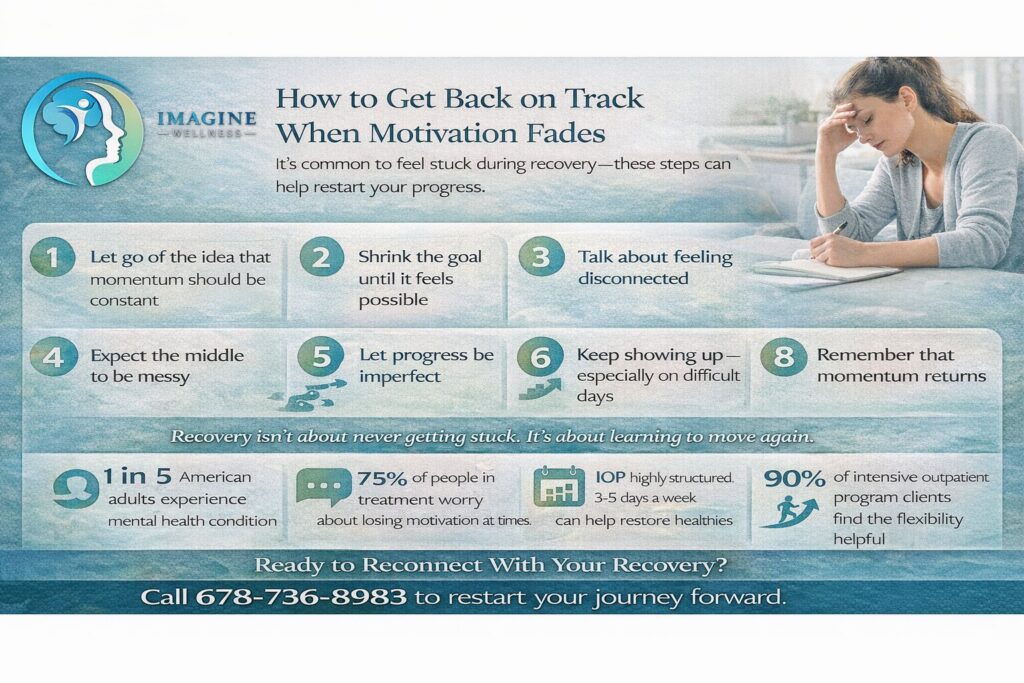
Step 5: Expect the Middle to Be Messy
Many recovery journeys follow a similar emotional pattern.
The beginning often brings hope and relief.
The middle can feel complicated.
This phase is where people begin confronting deeper patterns, habits, and emotions. It’s also where old coping strategies sometimes try to return.
Feeling uncertain during this stage is normal.
In fact, the middle phase of recovery is where some of the most important growth occurs.
For many individuals, continuing engagement in an Intensive outpatient program provides the consistency needed to move through this phase without losing direction.
Support during the middle matters just as much as support during the beginning.
Step 6: Let Progress Be Imperfect
Perfectionism quietly interferes with many recovery journeys.
People often believe they should always feel motivated, always say the right things in therapy, and always make the healthiest decisions.
But healing doesn’t work like that.
Some sessions will feel powerful.
Others will feel quiet.
Some weeks will bring breakthroughs.
Others will feel slow.
All of those moments contribute to progress.
Recovery is not about flawless performance.
It’s about learning, adjusting, and continuing forward.
Step 7: Keep Showing Up—Especially on Difficult Days
If there is one habit that predicts long-term progress, it’s consistency.
Showing up during the easy weeks is helpful.
Showing up during the difficult weeks is transformative.
Momentum doesn’t always feel dramatic. Often it looks simple:
- attending sessions regularly
- staying connected with therapists and peers
- practicing coping skills between meetings
Over time, those small commitments create powerful change.
Consistency quietly rebuilds confidence.
And confidence makes progress feel possible again.
Step 8: Remember That Momentum Returns
People sometimes assume that once momentum disappears, it’s gone forever.
But recovery is far more forgiving than that.
Momentum can return quickly once someone reconnects with support.
A meaningful conversation in therapy.
A group session where someone shares a relatable story.
A moment of clarity about personal goals.
These moments can reignite motivation in ways people don’t expect.
Progress often returns gradually, then suddenly.
And many people later realize that the difficult middle stages were where their recovery truly began.
Frequently Asked Questions
Is it normal to lose motivation during treatment?
Yes. Many people experience periods where motivation fades or progress feels slower. Recovery often includes emotional ups and downs.
What causes people to lose momentum during recovery?
Common factors include stress, emotional exhaustion, relapse, outside responsibilities, or feeling overwhelmed by deeper therapeutic work.
Does feeling stuck mean treatment isn’t working?
Not necessarily. Many people experience slower phases during treatment before meaningful progress returns.
What helps people rebuild momentum?
Small consistent actions—like attending sessions, staying connected with support systems, and practicing learned coping strategies—often help restore progress.
What if someone feels embarrassed about losing momentum?
Embarrassment is common, but clinicians expect recovery to include challenges. Talking openly about these experiences often leads to helpful support.
Can recovery progress continue after setbacks?
Yes. Many individuals experience temporary setbacks before continuing their recovery journey successfully.
Ready to Reconnect With Your Recovery?
If your momentum feels slow or uncertain right now, you’re not alone—and support can help you move forward again.
Call 678-736-8983 or visit our Intensive outpatient program services to learn more about our Intensive outpatient program services in Atlanta, GA.