

Have you ever found yourself saying “yes” when you desperately wanted to say “no”?
Do you apologize even when you’ve done nothing wrong? Feel responsible for keeping everyone else happy? Worry that setting boundaries will make people leave, become angry, or think less of you?
If so, you may have spent years believing you’re simply “too nice.”
But for some people, these patterns aren’t personality traits at all.
They may be part of the fawn response—a survival strategy the nervous system develops to stay safe during chronic stress or traumatic experiences.
While many people have heard of the fight, flight, or freeze responses, fewer realize there is a fourth common trauma response that centers on pleasing others to reduce conflict or danger. Understanding this pattern can be incredibly validating because it shifts the conversation from self-blame to self-understanding.
At Imagine Wellness Center, our trauma treatment programs help individuals throughout Fayetteville and the south Atlanta metro explore how past experiences continue to influence present relationships, emotions, and behaviors. With compassionate, evidence-based care, it is possible to build healthier boundaries and develop a greater sense of safety without constantly putting everyone else’s needs first.
Healing begins by recognizing that what once helped you survive does not have to define the rest of your life.
What Is the Fawn Response?
Most people are familiar with the body’s automatic responses to danger:
- Fight
- Flight
- Freeze
The fawn response is another way the nervous system attempts to stay safe.
Instead of confronting danger, escaping it, or shutting down, a person copes by becoming highly focused on keeping others pleased, calm, or satisfied.
This may involve:
- Avoiding conflict at all costs
- Prioritizing others’ needs over your own
- Agreeing even when you disagree
- Becoming highly attuned to other people’s emotions
- Trying to prevent anger, rejection, or criticism through compliance
The goal is not manipulation.
The goal is safety.
For someone whose nervous system learned that conflict could lead to emotional or physical harm, people-pleasing may become an automatic protective response.
How the Fawn Response Develops
The fawn response often develops in environments where relationships feel unpredictable, emotionally unsafe, or consistently stressful.
Children naturally depend on caregivers for protection and survival.
When caregivers are emotionally unavailable, highly critical, unpredictable, controlling, or abusive, children have limited ways to protect themselves.
They cannot simply leave.
Instead, the nervous system adapts.
Some children learn:
“If I keep everyone happy, maybe I’ll stay safe.”
“If I never cause problems, maybe I won’t be criticized.”
“If I always take care of everyone else, maybe I’ll be accepted.”
These survival strategies can continue into adulthood long after the original environment has changed.
Experiences That May Contribute
The fawn response is associated with many different forms of chronic stress and trauma, including:
- Childhood emotional neglect
- Emotional abuse
- Physical abuse
- Domestic violence
- Chronic criticism
- Growing up with unpredictable caregivers
- Relational trauma
- Bullying
- High-conflict family environments
Not everyone exposed to these experiences develops the same coping style.
Each person’s nervous system adapts differently based on many biological, psychological, and environmental factors.
Signs You May Have a Fawn Response
Because people-pleasing is often praised socially, many individuals do not recognize these behaviors as stress responses.
Some common signs include:
Difficulty Saying No
You agree to requests even when you’re exhausted because disappointing someone feels unbearable.
Constant Apologizing
You apologize frequently—even when something wasn’t your fault.
Fear of Conflict
Disagreements may trigger intense anxiety.
Rather than expressing your own opinions, you may quickly agree just to restore peace.
Losing Yourself in Relationships
Over time, your preferences, opinions, and needs become increasingly difficult to identify because so much energy goes toward meeting everyone else’s expectations.
Feeling Responsible for Other People’s Emotions
You may believe it’s your job to prevent others from becoming angry, disappointed, or upset.
Seeking Constant Approval
Compliments may feel temporarily reassuring, while criticism feels deeply painful.
Chronic Overcommitment
You say yes to too many responsibilities because setting limits feels selfish or unsafe.
Feeling Guilty About Boundaries
Even healthy boundaries may create intense guilt or anxiety.
Many people recognize several of these patterns only after beginning therapy.
Why the Brain Does This
The nervous system is remarkably adaptive.
Its primary goal is survival—not comfort.
When repeated experiences teach the brain that conflict leads to danger, the brain begins anticipating conflict before it happens.
People-pleasing becomes a way of reducing perceived risk.
Rather than asking:
“What do I need?”
The nervous system automatically asks:
“What does this person need from me so I stay safe?”
This process happens largely outside conscious awareness.
It is not a deliberate decision.
It is an automatic survival response shaped by past experiences.
Understanding this distinction is important because it replaces shame with compassion.
How the Fawn Response Affects Adult Relationships
Although the fawn response may have helped someone survive difficult experiences earlier in life, it can create challenges in adulthood.
Relationships may become unbalanced because one person’s needs consistently take priority.
Common difficulties include:
- Burnout from always caring for others
- Difficulty identifying personal goals
- Resentment that builds silently
- Anxiety about disappointing people
- Trouble asking for help
- Codependent relationship patterns
- Emotional exhaustion
- Low self-esteem
Ironically, constantly trying to avoid conflict can sometimes prevent the honest communication that healthy relationships require.
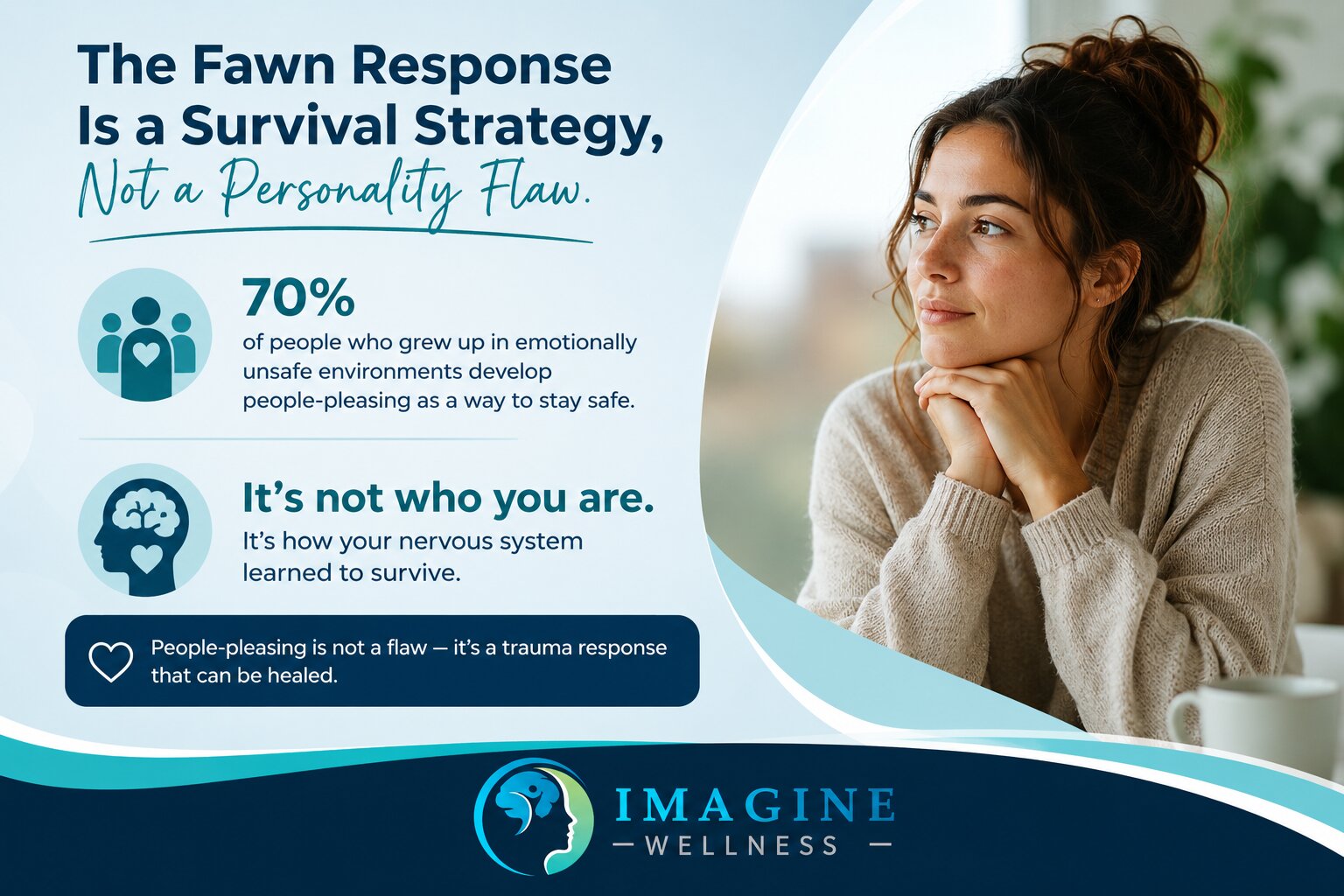
Why People-Pleasing Isn’t the Same as Kindness
Being compassionate is healthy.
Being considerate is healthy.
Having empathy is healthy.
The difference lies in choice.
Healthy kindness comes from freely choosing to care for others while also respecting your own needs.
The fawn response often feels less like a choice and more like an obligation driven by fear.
Someone may continue saying yes even when they feel overwhelmed because their nervous system interprets setting boundaries as unsafe.
Recognizing this difference can help people move toward healthier relationships without losing their compassion.
How Trauma Therapy Helps You Heal
One of the most encouraging aspects of the fawn response is that it is learned.
And learned survival patterns can be gradually reshaped.
Therapy does not aim to eliminate kindness or empathy.
Instead, it helps people develop the ability to care for others without abandoning themselves.
Understanding Trauma Patterns
Therapy helps individuals recognize how past experiences continue influencing current relationships and emotional reactions.
Awareness often becomes the first step toward meaningful change.
Building Emotional Safety
Many people need to experience relationships where they can express disagreement, set boundaries, and share emotions without fear of punishment.
Therapeutic relationships often provide opportunities to practice these experiences safely.
Learning Healthy Boundaries
Treatment may include learning how to:
- Say no respectfully
- Communicate needs directly
- Tolerate discomfort when setting limits
- Recognize healthy versus unhealthy relationship dynamics
Boundaries become less frightening as the nervous system learns they do not automatically lead to rejection.
Regulating the Nervous System
Trauma-focused therapies often include techniques that help reduce chronic hypervigilance and improve emotional regulation.
As the nervous system begins feeling safer, automatic people-pleasing behaviors often become less intense.
Rebuilding a Sense of Self
Healing also involves rediscovering:
- Personal values
- Preferences
- Interests
- Goals
- Identity outside of pleasing others
Over time, relationships become more balanced because they are built on authenticity rather than survival.
When Professional Support May Help
Consider speaking with a mental health professional if you:
- Feel unable to say no without overwhelming guilt
- Constantly prioritize others at the expense of your own well-being
- Struggle with boundaries in relationships
- Feel responsible for managing everyone else’s emotions
- Experience anxiety whenever conflict arises
- Notice people-pleasing patterns interfering with work, family, or relationships
These experiences do not mean something is “wrong” with you.
They may simply reflect survival strategies that once served an important purpose but are no longer helping you live the life you want.
Finding Trauma Support in Fayetteville, GA
Many people spend years believing that being endlessly accommodating is simply part of who they are. Only later do they realize that their people-pleasing developed as a way to stay emotionally or physically safe during difficult experiences.
At Imagine Wellness Center, we provide outpatient mental health services for individuals throughout Fayetteville and the south Atlanta metro. Through individualized, trauma-informed care, we help people understand how survival responses continue affecting present-day relationships and teach practical skills for building healthier boundaries, improving emotional regulation, and developing a stronger sense of self.
Healing doesn’t mean becoming less kind. It means learning that your own needs matter, too. Call Imagine Wellness Center today at (770) 270-3681 to schedule a confidential assessment and take the first step toward healing.
Frequently Asked Questions
Is fawning a trauma response?
Yes. The fawn response is widely recognized as a trauma-related survival response in which someone copes with perceived danger by prioritizing the needs, emotions, or approval of others. Although it is not an official DSM-5 diagnosis, it is a well-known concept in trauma-informed care.
How do I stop people-pleasing?
Reducing people-pleasing often begins with increasing awareness of your patterns, learning to set healthy boundaries, identifying your own needs, and gradually tolerating the discomfort that can come with saying no. Therapy can provide guidance and support throughout this process.
Can therapy actually help with fawning?
Yes. Trauma-informed therapy can help individuals understand why the fawn response developed, process unresolved trauma, regulate the nervous system, and practice healthier communication and relationship skills. Many people find they become more confident in expressing their needs while maintaining meaningful relationships.
Is the fawn response the same as being nice?
No. Kindness is a healthy choice made freely, while the fawn response is an automatic survival strategy driven by fear or a need to stay safe. Someone with a fawn response may struggle to say no or express disagreement because their nervous system perceives those actions as risky.
Can the fawn response change over time?
Yes. With self-awareness, supportive relationships, and evidence-based therapy, many people learn new ways of responding to stress. As healing progresses, it often becomes easier to set boundaries, communicate openly, and build relationships based on mutual respect rather than fear.