

At first, you tell yourself it’s just stress.
A rough week. Too much caffeine. Poor sleep. A demanding job. Maybe hormones. Maybe burnout. Maybe you just need a vacation.
But then it keeps happening.
Every afternoon, somewhere between lunch and the end of the workday, your body starts sounding an alarm you can’t shut off. Your chest tightens. Your thoughts speed up. You feel trapped inside your own skin. You try to answer emails while quietly wondering if you’re about to completely lose control.
And the strangest part?
You may look perfectly fine to everyone else.
A lot of people experiencing panic attacks become experts at hiding them. They continue working, parenting, showing up, smiling politely in meetings — while internally feeling like they’re barely holding themselves together.
If that sounds familiar, you are not dramatic. You are not failing. And you are not alone in this experience.
For many people, recurring panic attacks are a sign that stress has grown into something the nervous system can no longer quietly carry alone. Exploring structured daytime mental health support can help people understand what’s happening beneath the surface before things feel completely unmanageable.
Panic Attacks Often Build Slowly Before They Explode
One of the biggest misconceptions about panic attacks is that they appear out of nowhere.
Sometimes they do feel sudden. But for many people, panic is the final stage of stress that has been accumulating quietly for weeks, months, or even years.
You wake up already tired.
You move through the morning running on adrenaline and obligation. Coffee replaces rest. Productivity replaces emotional processing. You tell yourself to push through because other people are depending on you.
Then by afternoon, your nervous system reaches its limit.
It’s like holding a beach ball underwater all day long. At first, it seems manageable. But eventually the pressure becomes impossible to contain, and everything bursts upward at once.
That’s often what panic attacks are: the body refusing to suppress overwhelm any longer.
Why Afternoon Panic Attacks Are So Common
A lot of people notice their anxiety peaks around the same time every day, especially during the afternoon hours.
There are real emotional and physical reasons for that.
By midday or early afternoon, your body may already be dealing with:
- Rising stress hormones
- Mental fatigue
- Emotional masking
- Physical exhaustion
- Blood sugar fluctuations
- Workplace pressure
- Accumulated tension from the morning
And for parents, there’s often another layer underneath all of it.
You may already be carrying emotional worry about your child, your family, finances, relationships, or responsibilities waiting at home. Even if you aren’t consciously thinking about those fears every second, your nervous system still feels them.
Stress stacks quietly.
Then suddenly your body says, I can’t keep doing this at this pace.
That’s why panic attacks can feel confusing. They often happen during “normal” moments — sitting at your desk, driving home, standing in line for coffee, answering a routine phone call.
But internally, your system may already be overloaded.
High-Functioning Anxiety Is Still Anxiety
Many people struggling with panic attacks don’t fit the stereotype they imagine in their heads.
They’re still working. Parenting. Showing up for obligations. Paying bills. Meeting deadlines.
From the outside, they look functional.
Inside, though, they may feel terrified.
They may:
- Sit in their car trying to calm down before work
- Cry privately in bathroom stalls
- Fear embarrassing themselves publicly
- Avoid social situations because they feel emotionally fragile
- Constantly monitor their heartbeat or breathing
- Feel exhausted from pretending they’re okay
There’s often a deep sense of shame attached to this experience too.
Especially for people who are used to being dependable.
They think:
- “Why can’t I handle stress like everyone else?”
- “I should be stronger than this.”
- “Nothing terrible is even happening right now.”
- “What’s wrong with me?”
But panic attacks are not weakness.
In many cases, they’re a nervous system response to living in survival mode for too long without enough support, rest, emotional safety, or recovery.
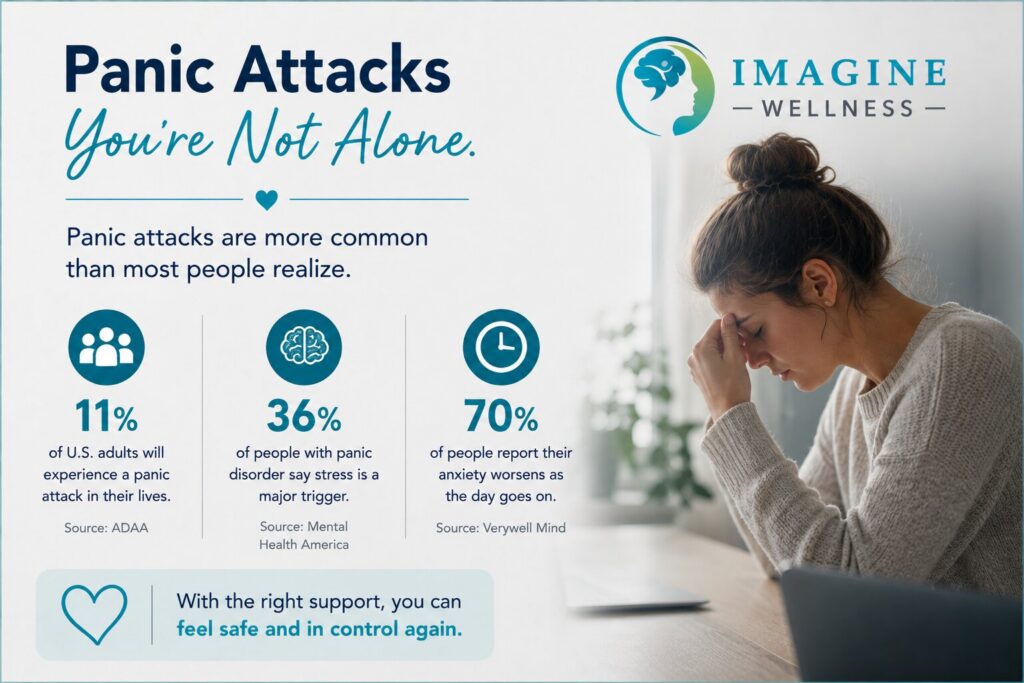
Sometimes the Body Speaks Before the Mind Does
One reason panic attacks feel so frightening is because they’re intensely physical.
Your heart races. Your breathing changes. Your chest tightens. You feel dizzy, shaky, detached, nauseous, or suddenly unsafe.
Some people genuinely believe they’re having a heart attack the first time it happens.
And honestly, that fear makes sense.
Panic attacks activate the body’s fight-or-flight response. Your nervous system believes there’s danger, even if your conscious mind cannot identify a clear threat.
What’s difficult is that many adults have become disconnected from their emotional exhaustion long before panic begins.
They normalize:
- Chronic stress
- Emotional numbness
- Poor sleep
- Irritability
- Constant tension
- Feeling overwhelmed all the time
Until eventually the body forces their attention.
In some ways, panic attacks can feel like the nervous system pulling a fire alarm after months of smoke filling the building.
Parents Carry More Than Most People Realize
The emotional scenario behind many panic attacks is rarely just “work stress.”
A lot of parents are carrying invisible emotional weight every single day.
Maybe your child is struggling emotionally. Maybe you’re constantly worried about their choices, safety, or future. Maybe you’ve spent years trying to stay strong for everyone else while quietly falling apart yourself.
Parents often become emotional shock absorbers for the entire family.
You keep functioning because you feel like you have to.
But fear has a physical cost.
So does grief. So does chronic worry. So does feeling emotionally responsible for everyone around you.
Eventually the nervous system starts waving a white flag.
And many parents don’t realize how overwhelmed they’ve become until panic enters the picture.
Panic Attacks Can Create Their Own Cycle
One of the cruelest parts about panic attacks is that people often start fearing the panic itself.
You begin anticipating it every afternoon.
You monitor your body constantly:
- “Is my heart racing again?”
- “What if it happens during a meeting?”
- “What if people notice?”
- “What if I completely lose control?”
That anticipation increases anxiety further.
Soon your body starts associating certain times, places, or routines with danger. Work becomes stressful before the workday even begins.
Some people start avoiding:
- Meetings
- Driving
- Crowded places
- Lunch with coworkers
- Phone calls
- Leaving the house altogether
This is where support becomes important.
Not because you’re broken.
But because living in a constant state of fear slowly shrinks your world.
You Do Not Need to “Earn” Help by Falling Apart Completely
A lot of adults wait far too long before seeking support because they believe they haven’t suffered “enough” yet.
They compare themselves to others.
- “At least I’m still functioning.”
- “Other people have it worse.”
- “I just need to toughen up.”
But functioning while miserable is not the same thing as being okay.
You do not need to collapse completely before your pain counts.
For some people, consistent therapy helps tremendously. Others benefit from more structured support during particularly overwhelming periods — especially when anxiety begins interfering with work, relationships, parenting, or daily functioning.
Some people need more than one hour a week of support while still wanting to remain connected to home and daily life. Structured daytime mental health care can sometimes provide additional stability, emotional support, and coping tools without requiring overnight treatment.
The goal is not to label you forever.
The goal is to help your nervous system stop living like danger is around every corner.
Healing Usually Starts Smaller Than People Expect
Many people imagine healing as one dramatic breakthrough moment.
But often it starts much quieter than that.
One honest conversation.
One appointment.
One moment of admitting:
“I don’t think I can keep carrying this alone.”
That moment matters.
Because panic attacks don’t usually mean you’re weak.
More often, they mean you’ve been strong for too long without enough support.
And there’s a difference.
FAQ: Panic Attacks at Work and Chronic Stress
Why do I keep having panic attacks every afternoon?
Afternoon panic attacks are often connected to accumulated stress, nervous system fatigue, emotional suppression, and physical exhaustion building throughout the day. By afternoon, many people’s stress tolerance becomes depleted.
Can work stress alone trigger panic attacks?
Yes. Chronic workplace stress can overwhelm the nervous system over time, especially when combined with personal stress, lack of rest, emotional pressure, or unresolved anxiety.
What does a panic attack physically feel like?
People commonly experience chest tightness, racing heartbeat, dizziness, sweating, shaking, nausea, tingling, shortness of breath, or feelings of unreality. Panic attacks can feel extremely physical and frightening.
Why do panic attacks make me feel like I’m losing control?
Panic activates the body’s fight-or-flight system, which is designed to respond to danger. Even when no immediate threat exists, the nervous system reacts as though you are unsafe.
Can high-functioning adults still have severe anxiety?
Absolutely. Many people experiencing intense anxiety continue working, parenting, and meeting responsibilities while privately struggling emotionally.
Should I seek help if panic attacks are becoming frequent?
If panic attacks are affecting your quality of life, work performance, sleep, relationships, or emotional well-being, professional support can help you better understand and manage what’s happening.
What if I’m embarrassed to talk about this?
That feeling is extremely common. Many adults experiencing panic attacks feel ashamed because they believe they “should” be able to handle stress better. But anxiety is not a personal failure, and seeking support is not weakness.
What kind of support helps people dealing with overwhelming anxiety?
Support depends on the individual. Some people benefit from therapy, stress management tools, or medication support. Others may need more structured care during particularly overwhelming periods to help stabilize emotionally and regain a sense of safety.
If anxiety and panic are starting to take over your daily life, you don’t have to keep carrying it silently. Imagine Wellness Centers offers compassionate support for people navigating overwhelming stress, anxiety, and emotional exhaustion.
Call 678-736-8983 or visit our structured daytime mental health support to learn more about our programs, php services in Atlanta.