

Sometimes people don’t “quit” treatment with a big decision.
They just stop showing up.
One missed session turns into two. Then the calendar moves forward, and suddenly it feels too awkward to return.
If that’s where you are right now, you’re not alone. Many people pause treatment halfway through and later realize they still want support. The important thing to know is this: restarting multi-day weekly treatment rarely means starting over.
Most of the time, it simply means continuing the work you already began.
Recovery isn’t a reset button. It’s more like picking up a book after you put it down.
You don’t forget the chapters you already read.
Step 1: Drop the “I Failed” Story
The biggest barrier to returning isn’t logistics.
It’s shame.
Many people believe leaving treatment early means they failed somehow. But the truth is that stepping away happens for many reasons:
- life stress becomes overwhelming
- mental health symptoms intensify
- schedules change
- relapse occurs
- emotions surface faster than expected
None of those things erase the work you already did.
As clinicians, we understand that recovery is rarely a straight path. People take breaks. They regroup. Sometimes they wander off course before finding their way back.
Stopping treatment doesn’t erase your progress. It simply means your journey paused for a while.
Step 2: Remember That Progress Doesn’t Disappear
One of the most common misconceptions about treatment is that progress only counts if someone completes the entire program.
That’s not how the brain works.
Even a few weeks of therapy can begin to reshape awareness. Many clients carry important insights with them long after they leave.
You may already notice changes like:
- recognizing triggers sooner
- noticing emotional patterns you once ignored
- becoming more aware of unhealthy coping habits
- understanding how stress influences substance use
Those skills don’t vanish.
They’re still there, even if things got messy for a while.
Restarting treatment often builds on that foundation rather than beginning again from the very start.
Step 3: Reach Out Before Shame Gets Louder
The longer someone waits to reconnect with treatment, the harder it can feel.
Shame tends to grow in silence. It creates stories like:
“They’re probably disappointed in me.”
“I already wasted their time.”
“It’s too awkward to go back now.”
But treatment teams are used to reconnecting with clients who stepped away.
It happens more often than people think.
Most clinicians are far less interested in why you left than they are in helping you move forward. A quick call or message can reopen the door.
You don’t need the perfect explanation.
You only need the willingness to start the conversation again.
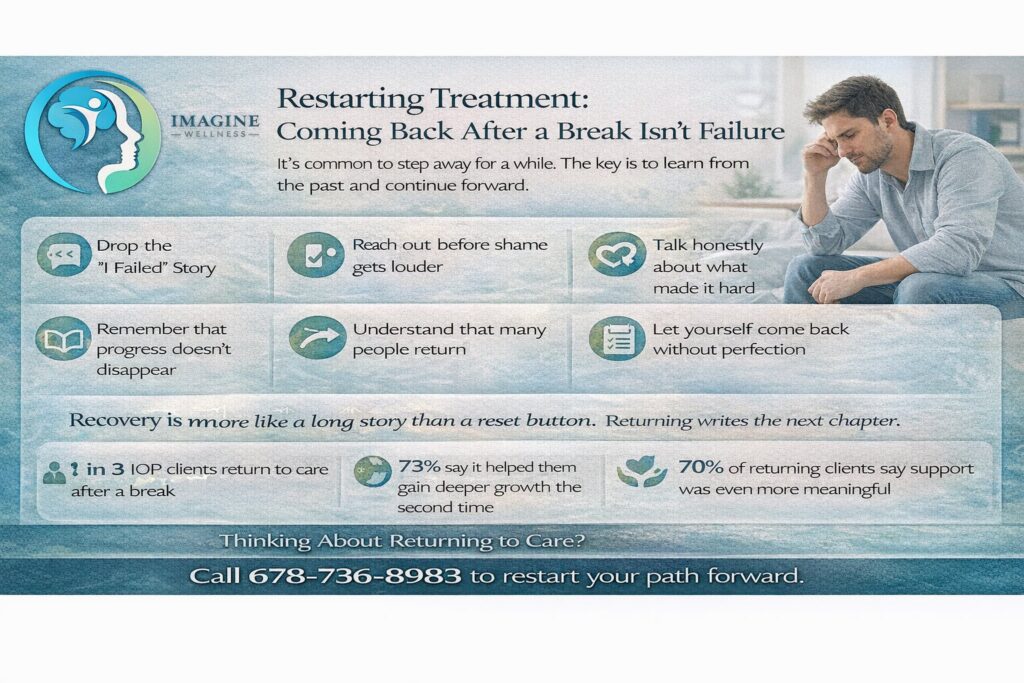
Step 4: Talk Honestly About What Made It Hard
If something made treatment difficult before, it’s important to talk about it.
Many people leave because something wasn’t working for them.
Maybe the schedule conflicted with work.
Maybe group sessions felt intimidating.
Maybe emotional topics surfaced too quickly.
Sometimes relapse occurs, and people feel embarrassed returning.
But these challenges provide useful information. When clinicians understand what made treatment difficult, they can adjust the approach.
That might include:
- modifying schedules
- adjusting therapy intensity
- addressing relapse triggers
- focusing more on stabilization before deeper work
Good treatment is flexible. It grows with the person receiving care.
Step 5: Focus on the Next Step, Not the Entire Journey
Another reason people hesitate to return is the fear of committing to months of treatment again.
That can feel overwhelming.
Recovery works best when broken into manageable steps.
The first step might simply be reconnecting with a clinician.
The next step might be attending one session.
From there, progress unfolds gradually.
You don’t have to solve the next six months of your life today. You only have to decide what your next step will be.
Step 6: Understand That Many People Return
Leaving treatment early can feel isolating, but it’s actually very common.
Life circumstances change. Emotional readiness shifts. Sometimes people simply need time before they feel ready to engage fully.
Returning to care often becomes the moment when recovery truly begins to stabilize.
For many individuals, re-engaging in an Intensive outpatient program provides the structure needed to reconnect with therapy while maintaining daily responsibilities like work and family life.
The important thing is not how the path started.
It’s that you’re willing to continue walking it.
Step 7: Let Yourself Come Back Without Perfection
One of the most damaging beliefs in recovery is the idea that you must return perfectly.
Many people think they need to “get things under control” before rejoining treatment.
But treatment exists specifically because life isn’t under control.
You don’t need a perfect explanation.
You don’t need a perfect week.
You don’t need perfect sobriety.
You only need willingness.
Showing up again—even after a long pause—is a powerful act of courage.
And courage is often the first real step toward healing.
Step 8: Remember That Recovery Is a Long Story
Think of recovery like writing a book.
Some chapters are messy. Some chapters are hopeful. Some chapters pause before the story continues.
Leaving treatment doesn’t end the story.
It simply marks a page where the character stopped for a while.
You still get to write the next chapter.
And sometimes the most meaningful growth begins after the moment someone decides to return.
Frequently Asked Questions
Is it common for people to leave treatment and return later?
Yes. Many people pause treatment due to life circumstances, emotional overwhelm, or relapse. Returning later is far more common than most people realize.
Will I have to start the entire program over?
Not always. Treatment teams often evaluate what progress you previously made and determine the best way to continue care from there.
What if I left because I relapsed?
Relapse is one of the most common reasons people step away from treatment. It’s also one of the most common reasons people return. Clinicians are trained to address relapse without judgment.
What should I say if I reach out again?
Honesty is enough. You might simply say you stopped attending for a while and would like to talk about returning. The goal is to restart the conversation, not explain everything perfectly.
What if I feel embarrassed about coming back?
Feeling embarrassed is normal. But most treatment professionals understand that recovery is complicated. Showing up again is viewed as strength, not failure.
Can treatment work even if I struggled before?
Yes. Many people find that returning to treatment after a pause helps them engage more fully. Experience—even difficult experience—often increases readiness for change.
Ready to Restart the Conversation?
If you stepped away from treatment but are thinking about coming back, the door is still open.
Call 678-736-8983 or visit our Intensive outpatient program services to learn more about our Intensive outpatient program services in Atlanta, GA.