

There are few things more painful than watching your 20-year-old child struggle—and feeling like you can’t fix it.
You may have tried outpatient therapy. Encouraged them to talk to someone. Maybe they even gave it a try—until they ghosted the therapist, or told you it “wasn’t for them.” Maybe you’re noticing they’re slipping again. Using more. Sleeping less. Or simply emotionally gone, even when they’re in the same room.
And now you’re asking the scariest question: What if they need more help than this?
At Imagine Wellness Centers in Peach Tree, Georgia, we support young adults and families who are walking this exact road. A Partial Hospitalization Program (PHP) can feel like a lifeline when therapy alone isn’t enough—and inpatient feels too extreme.
This isn’t about giving up. It’s about finding the right kind of help—at the right time.
Outpatient Therapy Has Limits—Especially for Young Adults
Therapy can be incredibly helpful. But for many 20-year-olds in crisis, once-a-week sessions don’t provide enough structure, connection, or consistency to create real change.
That’s especially true when:
- They’re using substances regularly
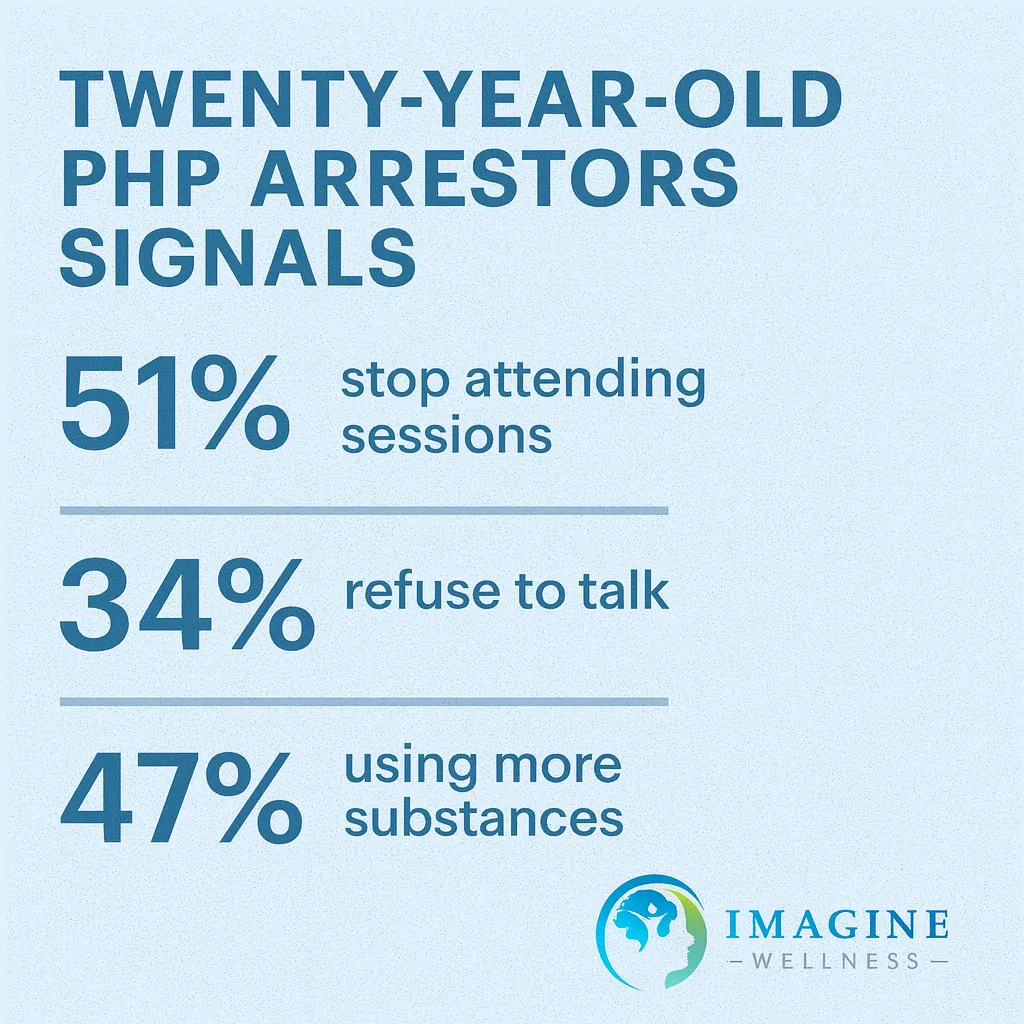
- They’ve stopped attending sessions
- Their moods are unpredictable or severe
- Their daily functioning has declined
- They feel stuck, numb, or overwhelmed
- You’re scared, but they’re not asking for help
Partial Hospitalization Programs offer more clinical support without requiring overnight stays. For many families, PHP is the missing middle ground—more than therapy, less than inpatient, and exactly what’s needed to break through a dangerous stall.
What PHP Looks Like at This Stage of Life
At 20, your child is legally an adult—but developmentally, they’re still becoming themselves. It’s a complex and often volatile age.
PHP is uniquely suited to meet that complexity. Our program provides:
- Daytime structure: Typically 5 days a week, 5–6 hours per day
- Individual therapy: 1:1 sessions to explore emotions, behaviors, and goals
- Group therapy: Safe peer spaces for connection and skill-building
- Psychiatric care: Medication support when needed
- Family coordination: When appropriate, we help parents stay in the loop and feel supported too
Unlike residential treatment, PHP allows your young adult to return home each night—maintaining some independence while building the foundation for healthier choices.
Why 20-Year-Olds Respond to PHP Differently
Young adults often resist treatment not because they don’t care—but because they don’t feel safe, understood, or in control.
Our approach centers on:
- Autonomy: We work with—not over—your child
- Non-judgment: We explore behavior without shame or blame
- Skill development: We teach emotion regulation, communication, and coping
- Relational healing: We help them rebuild trust—starting with themselves
At this age, trust matters. Authority doesn’t work the same way it did when they were 15. PHP gives them space to be seen and helped—without feeling infantilized or trapped.
When “They’re Not That Bad” Is a Dangerous Lie
Many parents hesitate to explore PHP because their child isn’t in full-blown crisis.
They might still be going to school. Working part-time. Socializing. That can make the idea of “treatment” feel like an overreaction.
But appearances don’t always tell the whole story. Many 20-year-olds maintain a surface-level normal while privately:
- Misusing substances
- Experiencing suicidal thoughts
- Emotionally numbing out
- Self-harming
- Isolating from real support
- Lying about what’s really going on
PHP is designed for exactly this gray area—when something is clearly wrong, but hasn’t exploded yet. The earlier they receive help, the more options they have—and the less damage they carry into the rest of their adult life.
Why PHP Can Work When Other Things Haven’t
For some families, PHP is the first major step toward healing. For others, it comes after months or years of trying everything else.
Here’s why it’s often a turning point:
1. More Contact = More Change
Daily sessions mean your child isn’t just talking about feelings once a week—they’re actively practicing new ways of thinking and behaving in real time.
2. Peer Support Matters
Group sessions allow them to hear others their age say things they might never accept from you—or even a therapist.
3. Clinical Oversight Prevents Backsliding
Licensed professionals are watching for patterns, tracking medication responses, and adjusting care daily. This helps catch spirals early.
4. No One Has to Pretend
Many young adults in PHP finally admit how bad it’s gotten—because they’re in a space where no one is shocked or disappointed.
You’re Not Weak for Considering This
We talk to parents every week who say:
- “I didn’t want to admit it was this bad.”
- “We thought they’d grow out of it.”
- “I kept waiting for things to turn around.”
- “I don’t want them to feel like we gave up on them.”
And we tell them this: recognizing the need for more care is not giving up. It’s showing up differently.
You don’t have to solve this alone. You just have to decide that help—real, structured, meaningful help—is worth exploring.
FAQs: Partial Hospitalization Program for 20-Year-Olds
How long does PHP last?
The average duration is 4 to 6 weeks, but it varies based on your child’s needs. We reassess regularly and build a plan for what comes next—whether that’s Intensive Outpatient, individual therapy, or another step down.
Will my child have to stop working or going to school?
We’ll work with your family to create a plan. PHP requires a daytime commitment, so some adjustments may be necessary. But many young adults return to school or work after completing the program with greater focus and emotional stability.
Is this for addiction or mental health?
Both. Many young adults struggle with overlapping issues—like anxiety, trauma, and substance use. Our PHP addresses the whole person, not just one symptom.
What if they don’t want to go?
We understand this is a common concern. Our team can help you approach the conversation in a way that reduces resistance and invites curiosity, not conflict.
What role do parents play?
You’re not cut out of the process. With your child’s consent, we include parents in updates, family sessions, or care planning when appropriate.
Your Family Deserves Relief—And Real Support
This isn’t just about your child’s healing. It’s about yours, too.
If you’re constantly watching for signs, absorbing their moods, or quietly panicking every time they don’t answer a text—your nervous system is carrying too much. You don’t have to stay in that state forever.
Our Partial Hospitalization Program in Peach Tree, Georgia exists to hold young adults gently and clinically—but also to give their parents a moment to breathe.
You’re not asking for perfection. You’re asking for progress. And that’s a brave, beautiful thing.
Let’s Talk About Whether PHP Is Right for Your 20-Year-Old
Call 678-736-8983 to learn more about how our Partial Hospitalization Program in Peach Tree can support your family.
Whether your child is ready now or not quite yet, we’re here to help you understand your options—with no pressure, no shame, and no expectation that you have all the answers.
You showed up today. Let us meet you there.