
There’s a moment many parents describe, but struggle to name.
It’s subtle at first… then suddenly undeniable.
Something shifts.
It’s no longer just stress, moodiness, or a rough patch.
It feels deeper. Heavier. Harder to reach.
If you’re here, you may already be carrying that quiet realization.
And if you are — you’re not alone in this.
Many parents begin searching for answers around conditions like bipolar disorder support, trying to make sense of changes that don’t quite fit anything they’ve seen before.
It Rarely Starts With a Clear Sign
No one hands you a clear moment that says, “This is what’s happening.”
Instead, it unfolds in pieces.
Maybe your child:
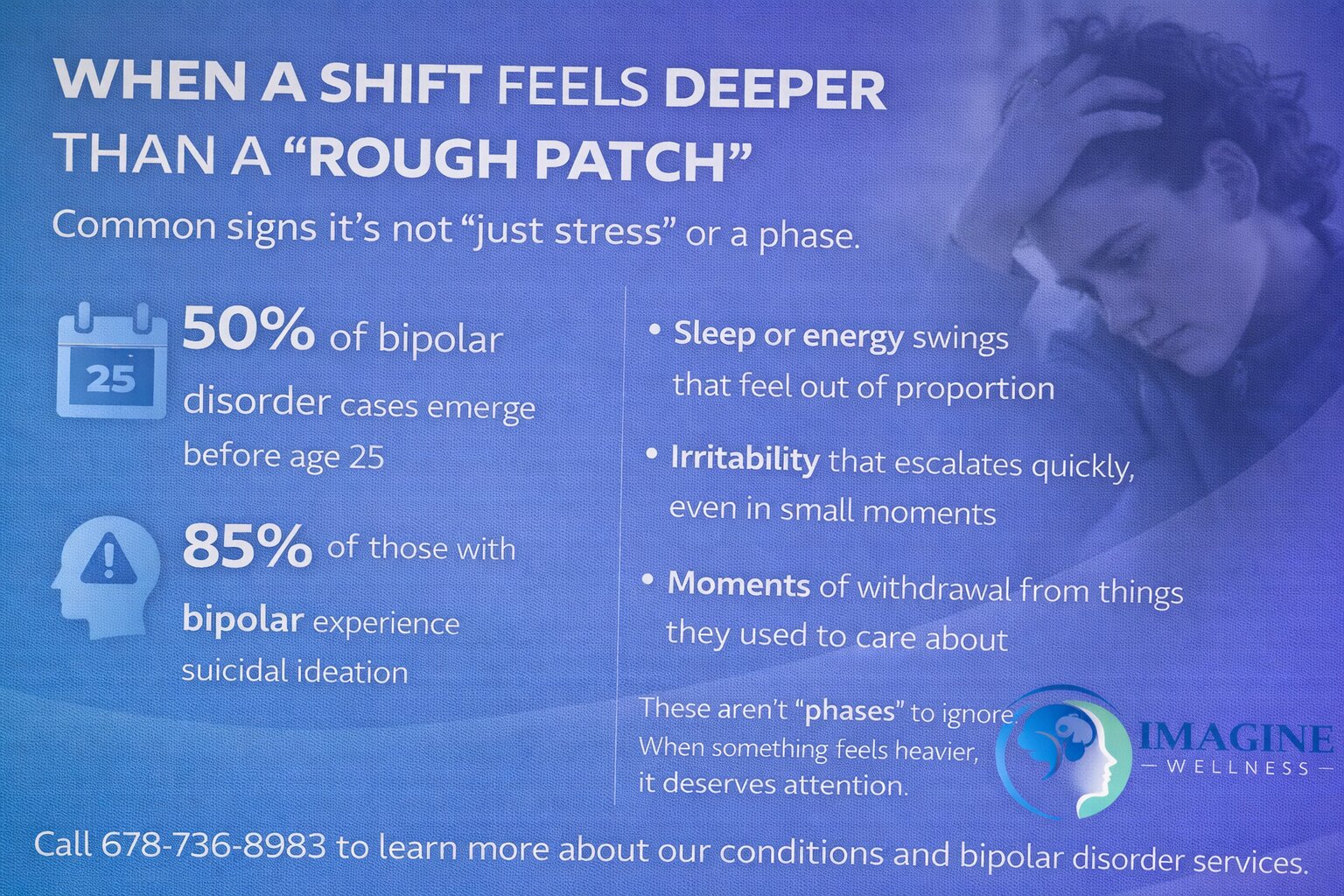
- Sleeps for days, then suddenly seems wired and restless
- Starts big projects or plans, then abandons them just as quickly
- Becomes irritable in ways that feel out of proportion
- Pulls away from friends, family, or routines they once cared about
You might find yourself second-guessing what you’re seeing.
Is this normal? Is this just stress? Am I overreacting?
That uncertainty can be one of the hardest parts.
Because you’re trying to respond to something that doesn’t yet have a clear shape.
The Emotional Whiplash Can Be Exhausting
One day might feel hopeful.
The next feels like everything is unraveling again.
That back-and-forth can leave you:
- Constantly on edge
- Overanalyzing every conversation
- Bracing for the next shift
It’s not just your child going through something.
You are too.
Parents often don’t talk about how draining it is to live in that in-between space — where things are serious, but not fully understood.
You Didn’t Cause This — Even If Your Mind Keeps Going There
At some point, most parents quietly replay the past.
Did I miss signs? Did I push too hard? Not enough?
It’s a natural response. Your brain is trying to make sense of something that feels out of control.
But mental health conditions are complex. They don’t come from one moment, one decision, or one parenting choice.
Blame might feel like it gives you something to hold onto.
But it won’t give you clarity — and it won’t help your child heal.
What matters now is what you do moving forward.
Your Child May Not Be Able to Explain What’s Happening
You might ask questions and get:
- “I don’t know.”
- “I’m fine.”
- Silence
Or responses that feel confusing, defensive, or even out of character.
That doesn’t mean they’re shutting you out on purpose.
Sometimes, they genuinely don’t have the words.
Imagine trying to explain a storm while you’re still inside it.
That’s often what it feels like for them.
What Looks Like Resistance Is Often Overwhelm
It’s easy to interpret certain behaviors as resistance:
- Refusing help
- Avoiding conversations
- Reacting strongly to small things
But underneath that, there’s often something else:
- Sensory overload
- Emotional flooding
- Fear they don’t understand
This doesn’t mean you ignore boundaries or difficult behavior.
But it does change how you respond.
Less force. More steadiness.
Less urgency. More consistency.
Stability Becomes the Anchor
When everything feels unpredictable, stability matters more than explanations.
That might look like:
- Keeping daily routines simple and consistent
- Responding calmly, even when things escalate
- Avoiding power struggles during high-intensity moments
Think of yourself as the anchor, not the fixer.
You don’t have to solve the storm.
You help your child stay connected to something steady while it passes.
The Level of Support May Need to Shift
This is often a difficult realization.
What worked before may not be enough now.
Occasional therapy or check-ins might not match what your child is experiencing.
Some families find that more structured support helps create:
- Consistency during the day
- A predictable rhythm of care
- A team approach instead of carrying everything alone
This can include options like multi-day weekly treatment or more immersive care environments.
It’s not about “how bad things are.”
It’s about matching the level of support to the level of need.
Progress Isn’t Linear — And That’s Not Failure
You might see improvement… and then setbacks.
Moments of clarity… followed by confusion again.
That doesn’t mean nothing is working.
It means the process is unfolding.
Mental health recovery isn’t a straight line.
It’s more like learning to walk on uneven ground — step, adjust, steady, repeat.
You’re Carrying More Than You Let On
Parents in this situation often become:
- Care coordinators
- Emotional support systems
- Crisis responders
- Researchers and advocates
All while still trying to maintain normal life.
It’s a lot.
And it’s okay to acknowledge that.
You don’t have to be perfect to be present.
You just have to keep showing up — in ways that are sustainable for you, too.
There Is Still a Future — Even If It Feels Uncertain
Right now, your view of the future may feel blurry.
That’s understandable.
But many families who’ve stood where you are now eventually find:
- Better understanding of what their child needs
- The right combination of support
- Moments of connection that start to return
Not overnight. Not perfectly.
But gradually.
If you’re trying to understand what your child is experiencing and what options exist, you can explore more about available conditions, bipolar disorder services.
Frequently Asked Questions
How do I know if this is something serious or just a phase?
If the changes you’re seeing feel intense, last longer than expected, or disrupt daily functioning, it’s worth taking seriously.
You don’t need certainty to seek support.
You just need concern.
Trust that instinct.
Should I push my child to get help if they resist?
Pushing too hard can sometimes create more distance.
Instead, focus on:
- Keeping conversations open
- Expressing concern without pressure
- Offering options rather than ultimatums
Sometimes timing matters just as much as the message.
What if my child won’t talk to me at all?
That’s more common than most parents expect.
Even if they’re not talking, your presence still matters.
Small things count:
- Sitting nearby
- Keeping routines consistent
- Letting them know you’re available without forcing interaction
Connection doesn’t always look like conversation.
Is it normal to feel this overwhelmed as a parent?
Yes. What you’re navigating is complex, emotional, and often unpredictable. Feeling overwhelmed doesn’t mean you’re not handling it well. It means you’re human — and you care deeply.
Will my child get better?
Many young adults do improve with the right support, time, and consistency. But “better” doesn’t always mean quick or simple. It often means learning how to manage, stabilize, and rebuild — step by step. And that process is possible.
You Don’t Have to Figure This Out Alone
If you’re at the point where you know something deeper is happening — but you’re not sure what to do next — that’s okay.
You’re allowed to need guidance here.
Call 678-736-8983 or visit our page to learn more about our conditions, bipolar disorder services in Atlanta, GA.