
There wasn’t one huge breakdown or crisis moment. Just a slow, heavy feeling I couldn’t shake anymore. Some days I couldn’t get out of bed. Others, I went through the motions, smiling at work or with friends—but inside, I felt completely unmoored.
It wasn’t denial anymore. It was knowing something needed to change, but not knowing how.
That’s when I found out about partial hospitalization programs—and it turned out to be the exact kind of support I didn’t even know I was allowed to ask for.
What Is a Partial Hospitalization Program?
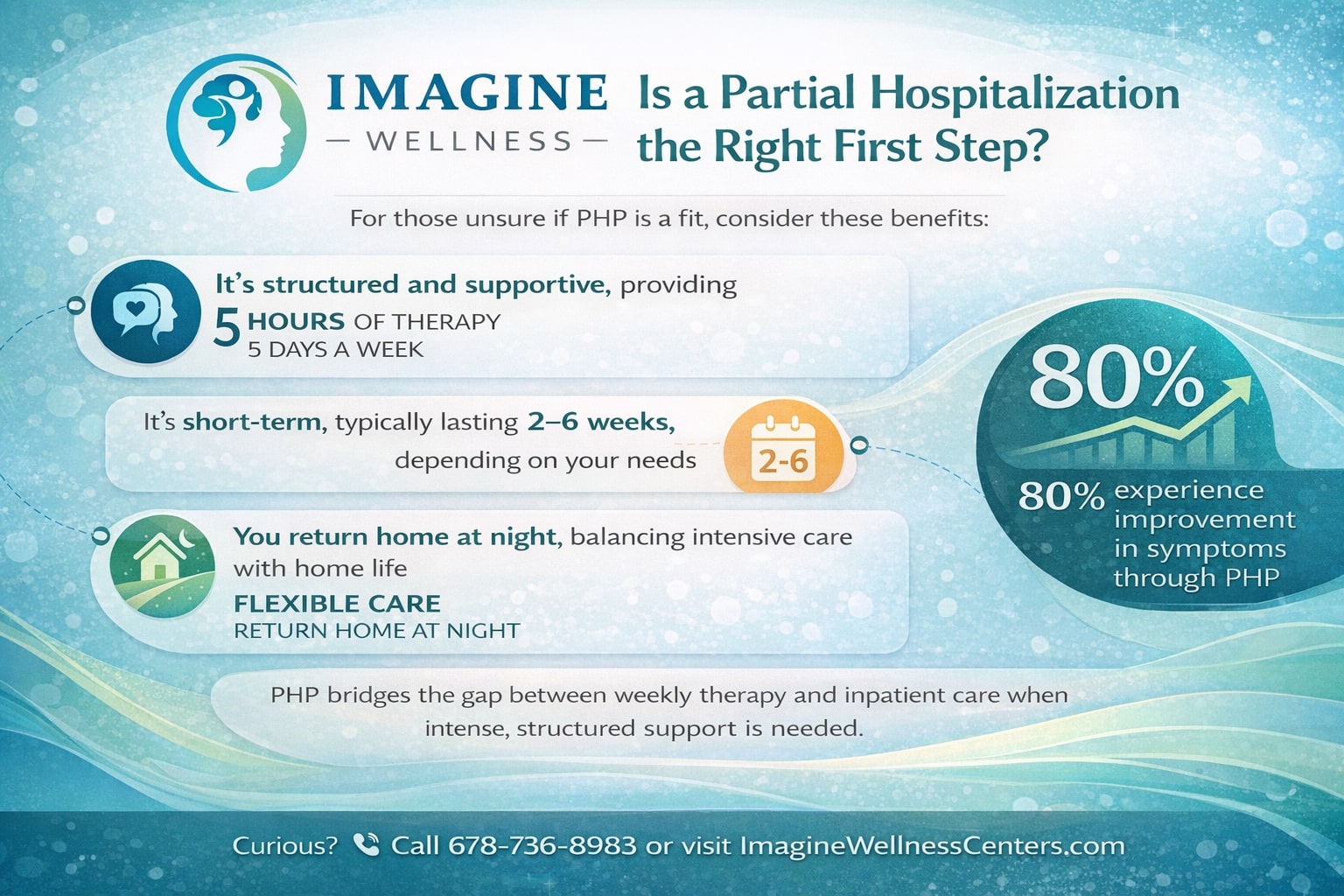
A partial hospitalization program (PHP) is an intensive, structured mental health treatment option. It provides several hours of therapy and support services during the day—typically five days a week—but unlike inpatient care, you return home each evening.
Think of it like this: PHP is more support than traditional outpatient therapy, but less restrictive than residential treatment. It’s for people who need more than just a weekly therapy session but don’t require 24/7 supervision.
For me, PHP felt like a lifeline. It gave me a solid foundation to start getting better without forcing me to leave my life entirely behind.
I Knew I Needed Help—But I Was Afraid to Take Up Space
There’s this voice that creeps in when you’re struggling quietly. It says things like:
- “Other people have it worse.”
- “Maybe you just need to try harder.”
- “You’re not sick enough for real help.”
That voice almost kept me from reaching out. But I was tired of pretending I was okay. And PHP helped meet me in that in-between place—not in crisis, but definitely not okay.
The truth? You don’t have to hit rock bottom to ask for help. And you’re allowed to take up space in a program like this, even if you’re still figuring out what’s wrong.
Structure Helped Me Feel Safe Again
One of the hardest parts of struggling with your mental health is the unpredictability. Mood swings, spiraling thoughts, foggy mornings—it all makes time feel slippery.
What PHP gave me was rhythm. A structure that wrapped around me like a weighted blanket.
Each day had a clear flow:
- Group therapy in the morning
- Coping skills workshops in the afternoon
- Individual sessions with a therapist and psychiatrist weekly
- Optional holistic services like mindfulness or yoga
It wasn’t rigid—but it was consistent. And that consistency helped me trust myself again.
Going Home at Night Let Me Practice in Real Life
One thing I worried about with treatment was getting stuck in a bubble—learning all these great tools, only to return home and feel lost again.
But in PHP, you go home every evening. You’re still in your own space, still dealing with your life—but you have daily support to process it.
I could try a new boundary with a friend or speak up at work—and then bring that experience into group the next day. It made the work feel real, not theoretical. Like healing was something I could actually live, not just talk about.
It Wasn’t a Magic Fix—But It Was a Real Start
I won’t lie and say PHP fixed everything. There were still hard days. Tears in the parking lot. Moments where I questioned if I was getting anywhere.
But by the end of the program, I could see my own progress:
- I was sleeping better.
- I could name my emotions instead of numbing them.
- I felt connected to people again, even just a little.
That was enough to keep going.
Signs a Partial Hospitalization Program Might Be Right for You
Still unsure if PHP fits what you need? Here are some signs to consider:
- You’ve tried weekly therapy, but it doesn’t feel like enough support
- Daily life feels unmanageable, even if you’re technically functioning
- You’re dealing with intense anxiety, depression, or mood swings
- You want more help without committing to inpatient care
- You need structure to interrupt spiraling or stuck patterns
- You’re scared—but ready to try something different
You don’t have to check every box. Even one or two of these might mean it’s worth exploring.
You’re Not Alone—And You’re Not “Too Much”
That was the fear I kept coming back to: What if I get there and I’m too much? Or not enough?
But everyone in that room with me—each person in the partial hospitalization program—was just trying. Trying to show up. Trying to feel okay. Trying to believe things could get better.
You don’t have to be perfect to start. You just have to be willing to say, “I need more help than I’m getting right now.”
That’s not weakness. That’s the beginning of healing.
Curious About Care Near You?
At Imagine Wellness Centers, our partial hospitalization program offers a safe, structured environment for people who are ready for change—but aren’t sure where to begin.
Whether you’re managing anxiety, depression, trauma, or just the quiet collapse that can happen when life gets overwhelming, we’ll meet you where you are. No pressure. Just a place to land and start sorting through what’s next.
📞 Call 678-736-8983 or visit to learn more about our Partial hospitalization program services in Atlanta.
Frequently Asked Questions About PHP
What’s the difference between PHP and inpatient treatment?
PHP allows you to return home at the end of the day, while inpatient treatment requires a full-time stay at a facility. PHP is ideal if you need daily support but still want to maintain some connection to your home environment.
How long does a PHP program usually last?
Most programs run 5 days a week for 4–6 hours a day and typically last between 2–6 weeks, depending on your needs and progress. Your treatment team will help determine the right length for you.
Will I still see a therapist in PHP?
Yes. You’ll have individual therapy, group sessions, and often access to a psychiatrist for medication management. It’s a comprehensive team-based approach.
Can I work or go to school while in PHP?
Some people do, especially if their employer or school allows flexibility. But keep in mind—PHP is a serious time commitment (like a part-time job). You’ll want to clear your schedule as much as possible to focus on healing.
What happens after PHP ends?
Most people step down into an intensive outpatient program (IOP) or return to weekly therapy. The goal is to help you transition into a support system that fits your daily life long-term.