
Sometimes, healing doesn’t go as planned. Maybe you left your intensive outpatient program (IOP) early. Maybe you just stopped showing up. Whatever the reason, you’re here now—and that matters more than how the first round ended.
At Imagine Wellness in Peachtree Corners, GA, we’ve worked with many people who needed to step away before they were ready to complete a program. We’ve also seen what happens when they come back: deeper breakthroughs, steadier support, and a new sense of possibility. If you’re thinking about giving IOP another try, this guide is for you.
You Didn’t Fail the Program—It Just Wasn’t the Right Time
It’s easy to internalize the idea that leaving treatment early means you failed. But recovery doesn’t work like that. Life is complex. You might have been dealing with work stress, childcare responsibilities, financial strain, or emotional overwhelm. Maybe your mental health took a dip and IOP felt too intense—or not intense enough.
Whatever the case, needing to step away doesn’t mean you didn’t care or weren’t trying. It just means the conditions weren’t right for you to continue at that time. And now, something’s shifted. That’s not failure—that’s growth.
Take Time to Reflect on What Didn’t Work
One of the most powerful things you can do before re-entering an IOP is to reflect—honestly and gently—on why it didn’t work the first time. Consider:
- Were the session times hard to manage with your schedule?
- Did you feel uncomfortable speaking in group settings?
- Was there a specific moment or conflict that made you stop coming?
- Did you not feel emotionally safe, seen, or supported?
This isn’t about blame. It’s about giving yourself—and your providers—a clearer understanding of your needs. Sharing these insights with your new clinician can help tailor your experience and avoid repeating what didn’t serve you.
This Time, Bring a Bit More Honesty—With Yourself and Others
The second time around, you already know a bit about what to expect. You might even have a sense of where you held back. Whether it was skipping certain topics, minimizing your struggles, or smiling through pain, you’re not alone. Many clients protect themselves in early treatment by staying surface-level. That’s okay—it’s human.
If you can, come back with just 10% more honesty. Say one thing you didn’t say last time. Ask the question you kept to yourself. Even small moments of truth can open big doors.
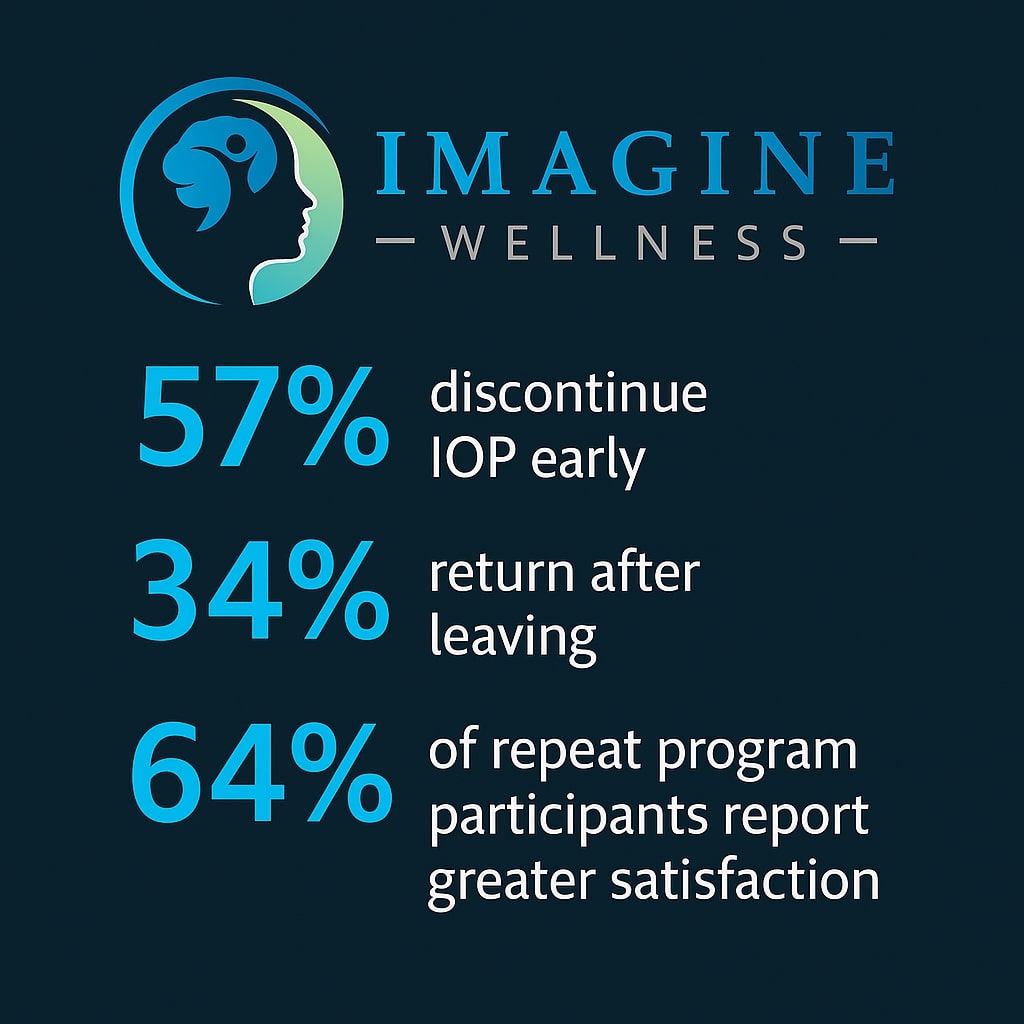
Normalize the Return—In Group and In Your Own Mind
Walking back into the group room can feel vulnerable. You might worry what people will think or assume others are judging you for leaving. But you’d be surprised how common your experience is—and how open people are to welcoming someone back.
If it feels right, name your return. A simple, “I stepped away before, but I realized I needed more support,” can be powerful. It shows strength, not weakness. And it invites others to be real about their own hesitations or struggles, too.
Use Staff as Allies, Not Just Administrators
If you left treatment without a formal goodbye—or ghosted entirely—it’s normal to feel awkward about coming back. But here’s the thing: We expect this. We know people need to step away sometimes. That doesn’t make you a burden. It makes you human.
Reach out to a staff member and say, “I’m thinking of coming back, but I feel a little weird about how I left.” A good program won’t make you feel bad about it. At Imagine Wellness, we see your return as a sign of commitment—not as a blemish on your record.
Create Anchor Points Outside of Group
IOP can feel like an island—supportive while you’re there, but isolated once you leave the building. One of the best ways to make this round more sustainable is to build bridges between sessions. Some options:
- Start a simple reflection journal to track your insights and emotions.
- Schedule a weekly check-in call with a friend or peer from group.
- Try a new self-care practice (like walks, yoga, or art) tied to your group days.
- Save one takeaway from each session to revisit later.
Recovery isn’t just what happens in the room—it’s also what you do with it afterward.
You’re Still Welcome—No Apology Needed
One of the most heartbreaking thoughts we hear from clients who left early is this: “They probably don’t want me back.” But let us be clear: You are welcome. The door was never closed. There is no shame in needing another try.
In fact, returning shows courage. It means you’re listening to something inside you that still wants healing, growth, and support. You’re allowed to come back. You’re allowed to need help again. And you’re allowed to do it on your terms.
Frequently Asked Questions About Returning to IOP
What if I ghosted and never said goodbye?
You’re not the first, and you won’t be the last. While it’s helpful to talk about why you left, we won’t pressure you. We’ll meet you where you are.
Will my insurance still cover a second round?
Many insurance plans do cover continued or resumed treatment, especially if there’s documented need. Our admissions team can help you verify your benefits confidentially.
Do I have to start over from the beginning?
Not necessarily. Your treatment team will assess what makes the most sense based on your goals and previous experience. Some clients repeat the full cycle; others pick up where they left off with a revised care plan.
Will the same people be in my group?
Maybe. Group composition changes regularly. If you have preferences about group size or dynamics, let us know—we’ll do our best to accommodate.
Can I talk about why I left?
Absolutely. Processing that experience can be healing—not just for you, but for others in group. That said, you don’t have to share anything you’re not ready to.
📞 Ready to reconnect?
Call 678-736-8983 or visit our Intensive Outpatient Program services in Peachtree Corners, GA to learn how we can support your next step forward—without judgment, without pressure, and without needing a perfect reason to return.