
I didn’t think I belonged in treatment.
I wasn’t falling down drunk. I didn’t get fired. I never missed a deadline. I looked fine. I was fine—if by fine you mean chronically anxious, emotionally numb, and drinking just enough to function without feeling anything.
On the surface, my life worked. People asked me for advice. I made things happen. I looked like the kind of person who didn’t need help.
Inside, I was unraveling.
What saved me wasn’t rehab, or a dramatic bottom, or an intervention. It was a structured, flexible Intensive Outpatient Program in Peach Tree, Georgia that gave me something I didn’t know I needed: permission to stop performing and start feeling.
I Lived in Control. And It Was Slowly Killing Me.
Perfectionism wasn’t just a trait for me—it was my armor. I relied on it to feel safe, valuable, and needed. I woke up early, made detailed lists, pushed myself to keep going—even when my body screamed for rest.
I kept it all neat: the calendar, the image, the life.
And behind the scenes, I drank.
Not to party. Not to rebel. Just to cope.
It started as one glass to wind down. Then two. Then a bottle wasn’t unusual. But I never called it a problem, because I never let it affect my “function.”
But here’s the truth: just because you’re functioning doesn’t mean you’re okay.
I Googled My Way Into a Corner
Late at night, in that quiet guilt-laced space between the last drink and going to bed, I’d search:
- “Can you be an alcoholic and still have a good job?”
- “How to stop drinking without going to rehab?”
- “Signs you need help if no one thinks you do”
I wasn’t looking for clarity. I was looking for permission to keep going without changing anything.
But the answers didn’t give me relief. They gave me a slow ache. Because deep down, I knew: this wasn’t sustainable. And I didn’t want this to be my normal.
I Thought Treatment Was for Other People
In my mind, treatment was for people in chaos. People who’d lost things. I thought I was too “together” to need help—and too prideful to ask for it.
That belief kept me stuck for years.
Until the night I couldn’t sleep again, and I searched “Intensive Outpatient Program Georgia” just to see what it was. I landed on a page from Imagine Wellness. The words didn’t shout. They invited. They didn’t say I had to break my life to change it.
They said, We meet you where you are.
That line stopped me.
Because where I was… was lonely, scared, and tired of pretending.
IOP Didn’t Break My Life. It Gave Me Room to Breathe.
Signing up was terrifying. I half-hoped someone would call and say, “Never mind, you’re too high-functioning for this.”
No one did.
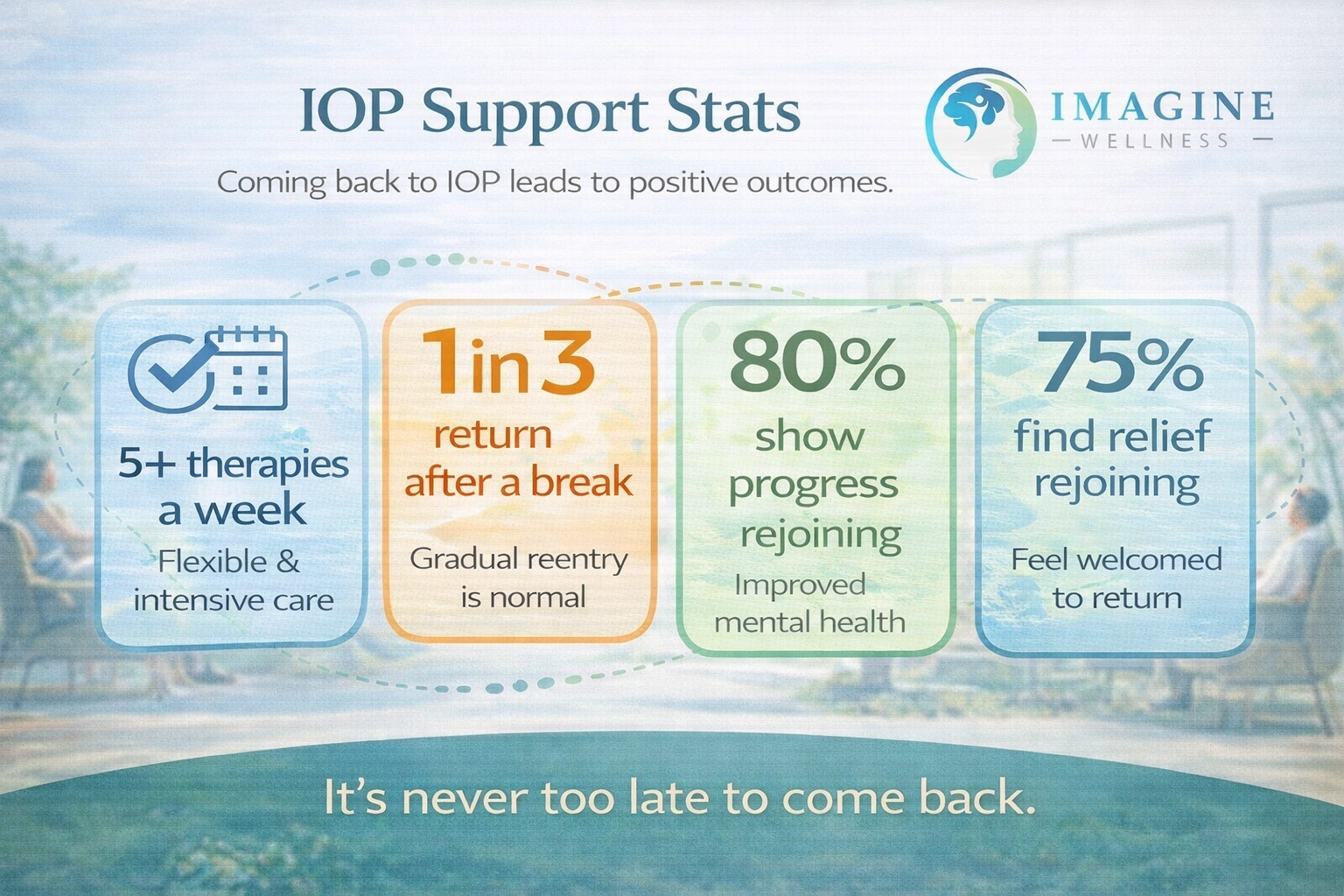
What I found at Imagine Wellness was a rhythm I could manage: a few hours of therapy, a few days a week. I kept working. I kept my routines. But inside that small carved-out space, I could finally exhale.
In group, I met people like me. Not broken. Just… brittle. Exhausted from trying to be everything to everyone. Some drank. Some didn’t. Some had been through worse. Some hadn’t. But all of us shared this weird shame of being too okay to need help—and too not-okay to keep going without it.
I Realized I Was More Than My Output
One of the first things my therapist said was, “You don’t have to earn your right to rest.”
I didn’t believe her.
I told her I felt guilty when I wasn’t productive. I told her I didn’t know who I was without goals. I told her the only way I could relax was with a drink in my hand.
And she didn’t flinch. She didn’t fix me. She just sat in it with me.
Week by week, we unpacked why my worth was so tangled up in performance. Why I’d rather numb than disappoint. Why I held everyone else together but left myself behind.
It wasn’t quick. It wasn’t clean. But it was real.
It Wasn’t Just About Quitting—It Was About Coming Back to Myself
I thought treatment would be about stopping something. Stopping the drinking. Stopping the overworking. Stopping the panic.
But what I learned in IOP was how to start something.
To start naming my feelings. To start trusting my body. To start resting before I collapsed. To start asking for help—even when I could “technically” do it alone.
I didn’t stop being driven. I stopped being driven by fear.
That’s a huge difference.
I Wasn’t Alone Anymore—And That Changed Everything
Every time I told a piece of the truth in group, someone nodded. Someone said, “Me too.” Someone said, “I’ve been there.”
That kind of witnessing heals you in ways that private self-help books and solo podcasts can’t.
There’s something powerful about being seen by people who understand the shame spiral of being “too high-functioning” to be taken seriously when you say you’re struggling.
At Imagine Wellness, I didn’t have to justify my pain. I just had to be willing to work through it.
What Life Looks Like Now
I still have goals. I still love structure. But I’m not ruled by them.
I’ve redefined productivity to include healing, joy, connection, and slowness.
I still feel the pull to be perfect. But I don’t have to answer it with a drink or a new spreadsheet.
And when people ask how I’m doing, I don’t always say “good.” Sometimes I say “tired” or “frustrated” or “grateful” or “working on it.” And I mean it.
IOP didn’t fix me. It helped me remember I was never broken.
FAQs: IOP for High-Functioning People Who Are Struggling
Do I need to be sober to start IOP?
No. Many clients begin IOP while still using or unsure if they want to stop. The goal isn’t perfection—it’s honesty and support.
Can I keep working while in the program?
Yes. That’s one of the biggest benefits of IOP. Sessions are scheduled to allow you to continue living your life while receiving real care.
What if I don’t think I’m “sick enough” for treatment?
That thought is often a sign you are carrying too much. You don’t need a crisis to want a better quality of life.
Is IOP only for substance use?
No. IOP addresses a wide range of issues including anxiety, burnout, codependency, perfectionism, and more—even if substance use isn’t your main struggle.
What happens after IOP?
That depends on your goals. Some people transition to weekly therapy, support groups, or continue with community care. Your team will help you plan your next steps.
You Don’t Have to Keep Holding It All Alone
If you’ve been managing everything—your job, your family, your image—but you feel yourself slipping inside, it’s not weakness to reach out.
Call 678-736-8983 to learn more about our Intensive Outpatient Program services in Peach Tree, Georgia. You deserve care, not because you’ve fallen apart, but because you’re still here—still trying—and maybe ready to try a different way.