

For many people, the decision to rethink drinking doesn’t begin with disaster.
It begins with a quiet moment.
Maybe you wake up one morning feeling more tired than usual. Maybe a weekend that used to feel relaxing now leaves you drained. Maybe you notice how often alcohol has become part of stress relief, socializing, or simply getting through the day.
Nothing dramatic has happened. Life still looks normal.
But the question appears anyway:
What if I felt better without this?
That moment of curiosity is more powerful than it seems. Many people exploring early recovery start exactly there—looking for supportive environments like structured daytime care where they can pause, reflect, and experiment with healthier patterns without stepping away from their entire life.
Recovery doesn’t have to begin with rock bottom.
Sometimes it begins with curiosity.
Step 1: Pay Attention to the Questions You’re Asking Yourself
People often assume that addiction begins with obvious warning signs.
But many individuals who explore recovery early are still functioning well. They’re maintaining careers, relationships, and responsibilities.
What changes first isn’t their life—it’s their awareness.
You might notice thoughts like:
- Why do I rely on this so much to relax?
- Why do I feel anxious the day after drinking?
- Why does cutting back feel harder than I expected?
- Would my mood or energy change if I stopped?
These questions are not signs that something is wrong with you.
They are signs that you are becoming more aware of how your habits affect your life.
And awareness is the first ingredient in meaningful change.
Step 2: Give Yourself Permission to Explore Without Labels
One of the biggest fears sober-curious people face is the idea that seeking support means committing to a lifelong label.
Many worry that reaching out automatically means they must identify as having a serious addiction.
But curiosity about drinking doesn’t require a label.
Some people simply want to understand their habits better. Others want to take a break from alcohol to see how it affects their health, relationships, or mental clarity.
Recovery can begin as exploration.
You’re allowed to ask questions.
You’re allowed to learn about yourself.
And you’re allowed to take steps toward change without having every answer in advance.
Supportive treatment environments often provide exactly that kind of space—where individuals can step back from daily routines and evaluate their relationship with alcohol honestly.
Step 3: Create Distance Between Stress and Coping
Many people who drink regularly are not seeking escape from life.
They’re trying to manage pressure.
Work responsibilities.
Family dynamics.
Financial concerns.
Emotional exhaustion.
Alcohol often appears to offer a quick solution.
For a few hours, stress fades. The mind relaxes. Social interactions feel easier.
But over time, reliance on alcohol can narrow the range of coping strategies available.
Instead of having multiple ways to manage stress, people begin relying on a single outlet.
Structured recovery environments help individuals expand their coping toolkit again.
People begin learning how to:
- identify emotional triggers earlier
- regulate stress without substances
- practice mindfulness and emotional awareness
- build routines that support long-term well-being
These skills take practice—but they create lasting resilience.
Step 4: Experience the Power of Consistency
One of the hardest parts of changing drinking habits alone is inconsistency.
You may decide to cut back during the week, then feel pressure to drink during social events. You might make progress for a few days, then return to old habits when stress increases.
This cycle can feel discouraging.
Structured support introduces something many people are missing:
Consistency.
Instead of relying entirely on willpower, individuals receive regular opportunities to reflect, learn, and practice new habits.
Recovery becomes a rhythm rather than a struggle.
Over time, that rhythm builds confidence.
And confidence makes change feel achievable.
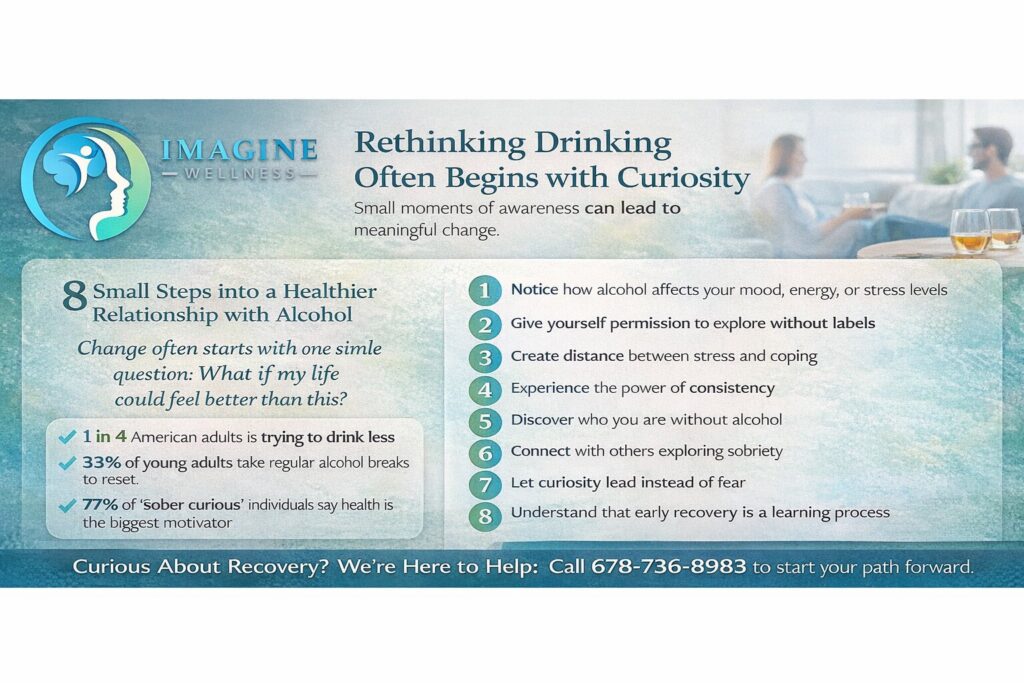
Step 5: Discover Who You Are Without Alcohol
A common fear among sober-curious individuals is losing something important.
People wonder:
Will social situations feel awkward?
Will I still be fun to be around?
Will life feel dull without drinking?
These concerns are understandable.
But many individuals discover something unexpected when they step back from alcohol for a while.
They reconnect with parts of themselves that had been quietly muted.
Clearer mornings.
More stable emotions.
Greater mental focus.
More genuine conversations.
Alcohol often promises relaxation and connection.
But many people find that removing it creates space for both.
Step 6: Connect With Others Exploring the Same Questions
Exploring sobriety alone can feel isolating.
Friends may still drink regularly. Family members may not fully understand what you’re going through. Conversations about alcohol can sometimes feel awkward.
But in recovery-focused environments, people often discover something powerful.
They are not the only ones asking these questions.
Meeting others who are exploring similar changes can be incredibly reassuring. Shared experiences help normalize the process of questioning habits and experimenting with new ways of living.
Connection reduces shame.
It reminds people that curiosity about alcohol is far more common than it appears.
Step 7: Let Curiosity Lead Instead of Fear
Many people delay exploring recovery because they fear what it might mean.
They worry that asking questions will lead to uncomfortable answers.
But curiosity is not a threat.
It’s an invitation.
It invites you to learn more about yourself. It opens the door to new possibilities. And it allows you to consider changes that might improve your well-being.
For individuals who want stronger support during this exploration, a Partial hospitalization program can provide structured guidance and accountability while allowing people to remain connected to their everyday lives.
For many people, that structure becomes the bridge between curiosity and lasting change.
Step 8: Understand That Early Recovery Is a Learning Process
Early recovery isn’t about perfection.
It’s about learning.
People experiment with new routines, develop healthier coping tools, and observe how their lives change without alcohol.
Some days will feel empowering. Others may feel uncertain.
Both experiences are part of the process.
Recovery is less about reaching a finish line and more about building a life that feels sustainable and meaningful.
And that process begins with small steps.
Sometimes those steps start with a single question.
What if my life could feel better than this?
Frequently Asked Questions
What does it mean to be sober curious?
Being sober curious means exploring your relationship with alcohol and considering how your life might change with less or no drinking.
Do I need to identify as having an addiction to seek help?
No. Many people seek support simply because they want to understand their habits better or experiment with healthier coping strategies.
Is it normal to question my drinking even if my life looks stable?
Yes. Many people begin exploring recovery while still functioning well in work, relationships, and daily responsibilities.
What helps people succeed in early recovery?
Consistent support, healthy routines, emotional awareness, and learning alternative coping strategies all play important roles.
Can structured treatment support people who are just exploring sobriety?
Yes. Structured support can help individuals reflect on their habits, develop new coping tools, and build confidence in their recovery journey.
Will recovery change who I am as a person?
Recovery doesn’t erase your personality. Many people find that removing alcohol helps them reconnect with parts of themselves that had been overshadowed by stress or unhealthy coping habits.
Ready to Explore What Recovery Could Look Like?
If you’re curious about changing your relationship with alcohol or seeking support during early recovery, help is available.
Call 678-736-8983 or visit our Partial hospitalization program services to learn more about our Partial hospitalization program services in Atlanta, GA.